
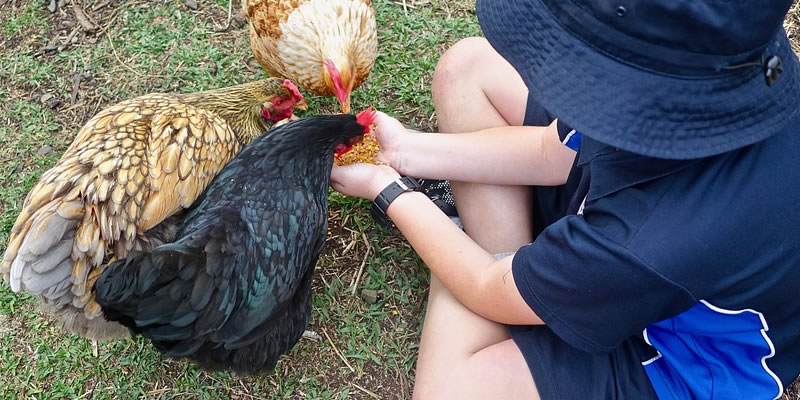
Grass and insects make up around 20% of a chicken’s natural diet, especially for free-range birds. Chickens instinctively forage for protein-rich insects, worms, and fresh greens, which play an important role in their overall nutrition and health.
In addition to natural foraging, chickens can also consume kitchen scraps and food waste in small controlled amounts. However, feeding leftovers should always be limited. Offer only what your flock can finish within 10–15 minutes to prevent spoilage, pests, and health issues.
The majority of a chicken’s diet is still based on grain-based commercial feed, which provides balanced nutrition and is readily available in local markets. The exact feed type depends on the bird’s age, breed, and production purpose.
Table of Contents
Chicken Diet Breakdown by Type
Adult Laying Hens
Adult hens require layer feed rich in calcium and protein to support strong eggshell formation and consistent egg production.
Baby Chicks
Chicks should be fed starter feed until approximately 18–20 weeks of age. This ensures proper growth, immune development, and bone strength before laying begins.
Meat Chickens (Broilers)
Broiler chickens require a structured feeding program using starter, grower, and finisher feeds to maximize healthy weight gain and efficient growth.
Types of Chicken Feed
Commercial chicken feed is commonly available in different forms such as mash, crumbles, or pellets. Each form provides the same nutritional value but differs in texture and suitability based on age and feeding behavior.
Natural and Sustainable Feed Options
Beyond commercial feed, chicken owners can also supplement diets with natural food sources. Sustainable feeding methods include:
- Black soldier fly larvae from kitchen waste
- Home-grown greens and perennials
- Garden insects and worms
- Controlled food scraps from the kitchen
These alternatives help reduce feed costs while improving diet diversity and supporting natural foraging behavior.
Conclusion
A balanced chicken diet consists mainly of formulated feed, supplemented with natural forage such as insects and greens, which account for about 20% of intake. Proper feeding based on age and production type ensures healthier chickens, better egg production, and improved growth performance.

