
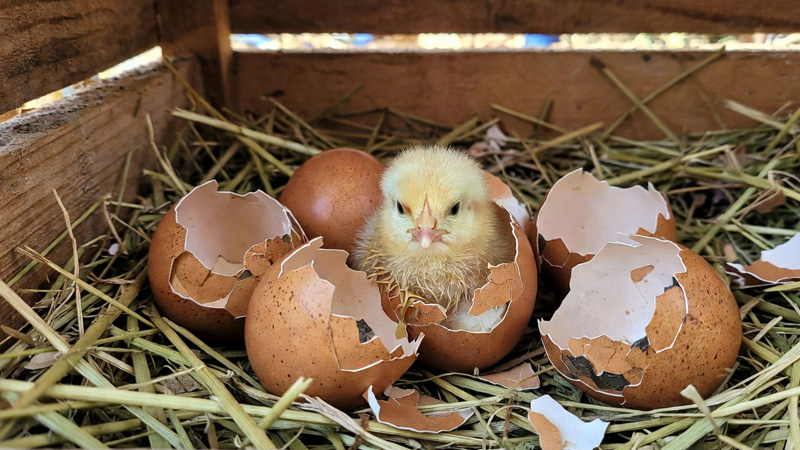
If you plan to raise chickens successfully, learning how to hatch eggs is one of the most important skills you can develop.
Although buying baby chicks is easier and faster, understanding the incubation and hatching process gives you more control over your flock. It also allows you to produce your own chicks whenever needed.
Of course, fertilized eggs are required before any chick can develop inside an egg. Without fertilization, eggs will never hatch no matter how long they are incubated.
This is why chicken keepers who want to hatch eggs usually keep at least one rooster together with their hens.
Even if your primary goal is egg production rather than breeding, understanding the basics of incubation still helps you become a better poultry keeper.
This beginner-friendly guide explains everything from selecting fertile eggs to managing the full 21-day incubation process.
Table of Contents
- Broody Hen vs Incubator: Which One Is Better?
- Should You Buy Fertilized Eggs?
- Why Many Chicken Keepers Prefer Hatching Their Own Eggs
- How to Choose the Best Eggs for Incubation
- What Is Egg Candling?
- Should You Clean Eggs Before Incubation?
- Important Rules Before Incubation
- The 21-Day Chicken Egg Incubation Process
- What Is Lockdown?
- What Happens During Hatching?
- Dry Incubation vs Wet Incubation
- Conclusion
Broody Hen vs Incubator: Which One Is Better?
There are two common ways to hatch chicken eggs:
- Using a broody hen
- Using an incubator
Using a Broody Hen
A broody hen is a hen that naturally wants to sit on eggs continuously until they hatch.
Some hens become extremely protective and refuse to leave the nest once broodiness begins.
To test whether a hen is broody, place fake eggs or golf balls inside the nesting box. If she stays on the nest most of the day and becomes defensive about the eggs, she is likely broody.
Many hens remain broody for roughly 21 days, which matches the normal chicken egg incubation period.
However, relying on a broody hen has disadvantages too.
Some hens suddenly abandon the nest before hatching is complete. Others may eat and drink less while brooding, which can weaken them physically.
Because of this, hatch rates can sometimes become unpredictable.
Using an Incubator
An incubator gives you greater control over temperature, humidity, and egg turning.
Incubators may be:
- Manual
- Fully automatic
Manual incubators require frequent monitoring and regular egg turning by hand.
Automatic incubators simplify the process by maintaining stable conditions and turning the eggs automatically.
Some chicken keepers even build homemade incubators to reduce costs.
When managed correctly, both broody hens and incubators can produce excellent hatch rates.
Should You Buy Fertilized Eggs?
If you do not own a rooster, purchasing fertilized eggs becomes necessary if you want to hatch chicks.
However, buying fertilized eggs carries some risks.
Not every seller is reliable, and some may falsely advertise eggs as fertile even when many are not.
Shipping can also damage eggs internally or expose them to temperature problems during transit.
In some situations, contaminated eggs may even introduce diseases into your flock.
To reduce problems:
- Buy only from trusted breeders or hatcheries
- Read customer reviews carefully
- Avoid poorly packaged shipments
- Choose sellers experienced with shipping hatching eggs
Proper research before buying can save a lot of frustration later.
Why Many Chicken Keepers Prefer Hatching Their Own Eggs
Many experienced poultry owners prefer using eggs from their own flock rather than purchasing fertilized eggs from others.
There are several reasons for this.
- You control the genetics of your flock
- You know the health condition of the parent chickens
- Introducing chicks into your flock becomes easier
- You can experiment with different breeds and egg colors
- The process itself is rewarding and educational
Hatching your own chicks also helps reduce long-term flock replacement costs.
How to Choose the Best Eggs for Incubation
Egg selection is one of the most important parts of successful hatching.
Poor-quality eggs often produce weak embryos or fail to hatch entirely.
Even under ideal conditions, hatch rates between 40% and 80% are already considered acceptable.
You should also expect roughly half of the chicks to be males.
Best Egg Size for Hatching
Medium-sized eggs generally produce the healthiest chicks.
Extremely large eggs may contain double yolks. While double-yolk eggs seem interesting, they rarely hatch successfully because two embryos compete for limited space and nutrients.
Very small eggs are not ideal either.
Some tiny eggs may contain underdeveloped yolks or weak embryos. Eggs from very young pullets are often smaller and may produce weaker chicks.
Most good hatching eggs weigh approximately 53 to 63 grams.
Best Egg Shape for Incubation
Normal oval-shaped eggs usually hatch best.
Egg shape does not determine chick gender despite many old myths.
Pointed eggs do not guarantee roosters, and rounded eggs do not guarantee hens.
Oddly shaped eggs often experience poor hatchability.
Extremely elongated, football-shaped, or highly rounded eggs are usually avoided.
One exception is Marans eggs, which naturally tend to appear more rounded than typical chicken eggs.
Checking for Shell Problems
Inspect eggs carefully before incubation.
Avoid eggs with:
- Hairline cracks
- Wrinkled shells
- Thin shells
- Heavy calcium deposits
- Porous shells
- Deep ridges or bumps
Cracked eggs are risky because bacteria can enter through damaged areas and contaminate nearby eggs inside the incubator.
Shell abnormalities may also indicate nutritional problems, stress, disease, or shell gland defects in the laying hen.
What Is Egg Candling?
Candling is the process of shining a bright light through an egg inside a dark room.
This allows you to inspect the inside of the egg without opening it.
Candling helps identify:
- Fertility
- Embryo development
- Blood rings
- Cracks
- Internal abnormalities
Most people use a strong flashlight or specialized egg candler instead of an actual candle today.
Candling is usually performed:
- Before incubation
- Around day 7
- Around day 14
Should You Clean Eggs Before Incubation?
This topic remains highly debated among poultry keepers.
Eggshells naturally contain a protective coating called the bloom or cuticle. This layer helps block bacteria from entering the egg.
Washing eggs aggressively can remove this protective barrier.
Because of that, many breeders avoid washing hatching eggs unless absolutely necessary.
If eggs are only lightly dirty, dry cleaning methods are usually safer.
Very dirty eggs are generally avoided altogether because contamination risk becomes much higher.
If wet cleaning is necessary, temperature control matters carefully.
Water that is too cold may pull bacteria inward through shell pores, while water that is too hot can damage the developing embryo.
Important Rules Before Incubation
Proper preparation greatly improves hatch success.
Before setting eggs inside the incubator:
- Use eggs that are ideally 5 to 7 days old
- Store eggs around 55°F (13°C)
- Keep the pointed end facing downward
- Turn stored eggs at least once daily
- Sanitize the incubator thoroughly
- Run the incubator for 24 hours before adding eggs
Pre-running the incubator ensures temperature and humidity remain stable before incubation officially begins.
The 21-Day Chicken Egg Incubation Process
Chicken eggs normally hatch after approximately 21 days.
Maintaining proper temperature, humidity, and egg turning is critical during this period.
Temperature Requirements
Most incubators should maintain a temperature close to 100.5°F (38°C).
Even small temperature fluctuations can negatively affect embryo development.
Humidity Requirements
Humidity should usually stay between 25% and 60% during the first 18 days.
A hygrometer helps measure humidity accurately.
Humidity can be increased by adding water to the incubator reservoir.
If humidity becomes too high, briefly opening the incubator may help reduce moisture levels.
Turning the Eggs
Eggs should be turned regularly during the first 18 days.
Turning prevents the embryo from sticking to the shell membrane.
Ideally, eggs should be turned at least every 8 hours.
Many people mark eggs with an “X” and “O” to track turning direction manually.
If using an automatic egg turner, check regularly to confirm it is functioning properly.
Candling During Incubation
Eggs are commonly candled on:
- Day 7
- Day 14
This helps identify developing embryos and remove non-viable eggs before they spoil.
What Is Lockdown?
Lockdown begins at day 18.
At this stage:
- Stop turning the eggs
- Remove automatic turners if necessary
- Increase humidity to around 70% to 80%
- Maintain stable temperature
- Avoid opening the incubator
During lockdown, chicks position themselves for hatching.
Opening the incubator too often may reduce humidity suddenly and make hatching difficult.
What Happens During Hatching?
Most chicks begin hatching around day 21.
However, some may hatch slightly earlier or later.
In some cases, healthy chicks may still hatch around day 23.
Once chicks pip the shell, the full hatching process may take anywhere from 7 to 24 hours.
Do not rush to help chicks out of the shell unless absolutely necessary.
Premature assistance can cause bleeding or other fatal complications.
After chicks fully hatch and dry off, transfer them to a warm brooder set around 90°F to 95°F.
Dry Incubation vs Wet Incubation
Some chicken keepers practice dry incubation instead of maintaining higher humidity throughout incubation.
Dry Incubation
Humidity stays relatively low, often between 15% and 30% during the first 17 days.
Water may not be added unless humidity drops too low.
Humidity increases only during lockdown.
Wet Incubation
Wet incubation maintains moderate humidity consistently throughout the process.
Which method works better depends heavily on local climate conditions.
The goal is to prevent humidity from becoming excessively low or excessively high.
Conclusion
Hatching chicken eggs successfully requires preparation, patience, and close attention to detail.
Choosing good-quality eggs already increases your chances dramatically before incubation even begins.
From temperature control to humidity management and proper egg turning, every step matters.
Patience is equally important.
Waiting 21 days may feel long, especially for beginners, but rushing the process usually causes more harm than good.
Whether you use a broody hen or an incubator, proper management can eventually reward you with healthy, active baby chicks and a stronger understanding of poultry care.

