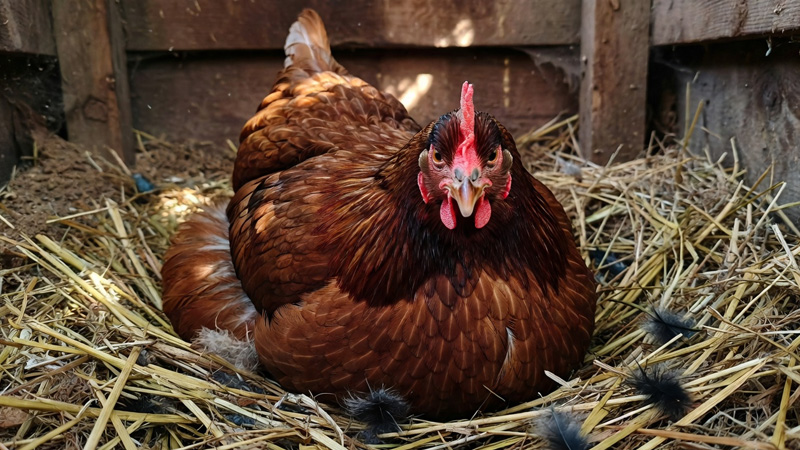
Some hens take egg sitting very seriously.
One day they are roaming around normally, then suddenly they refuse to leave the nesting box. They puff up, growl at your hand, and act like the nest belongs only to them. That is broodiness.
For backyard chicken keepers, a broody hen can save a lot of work during hatching season. You do not need to constantly adjust incubator settings or keep checking humidity every few hours. The hen handles most of it herself.
Still, it is not always smooth. Some hens quit halfway through incubation. Others turn into terrible mothers after the chicks hatch. That is why beginners should know what to expect before trusting a hen with fertilized eggs.
Table of Contents
What Is a Broody Hen?
A broody hen is simply a hen that wants to hatch eggs.
Once her maternal instinct kicks in, she will stay on the nest for long periods and protect the eggs underneath her. Sometimes they are not even her own eggs. Broody hens do not care much about ownership.
The entire incubation period usually lasts around 21 days.
Some breeds become broody more often than others. Cochins, Brahmas, and Orpingtons are well known for it. Leghorns and Rhode Island Reds are less reliable if you want natural hatching.
That is partly because heavy egg production and strong broodiness rarely go together. Hens bred to lay constantly usually do not want to stop and sit on a nest for three weeks.
Once a hen goes broody, she also stops laying eggs for a while.
Signs Your Hen Has Gone Broody
Most broody hens behave differently almost overnight.
She Stays on the Nest All Day
If your hen refuses to leave the nesting box even after the eggs are collected, there is a good chance broodiness has started.
Some hens stay there for hours even when the nest is empty.
She Pulls Feathers From Her Chest
This surprises many first-time chicken keepers.
Broody hens often remove feathers from their breast area so their warm skin can touch the eggs directly. That extra heat helps during incubation.
She Gets Defensive
Normally calm hens may suddenly peck your hand when you reach into the nest.
They hiss sometimes too.
It is not personal. They are trying to protect what they think are future chicks.
She Wants Privacy
Broody hens prefer dark corners and quiet nesting areas. If your hen suddenly avoids the rest of the flock and spends more time hidden away, pay attention.
She Eats Less
This is one reason broody hens need monitoring.
Some become so committed to sitting that they barely leave the nest to eat or drink. A healthy hen should still get up briefly every day.
Dust Bathing Stops
Chickens normally clean themselves with dust baths, but broody hens often skip them.
That can lead to lice or mite problems if the nesting area stays dirty for too long.
How to Care for a Broody Hen
A broody hen handles most of the incubation work herself, but she still needs support.
Keep Food and Water Close
Place a feeder and waterer near the nest so she does not need to travel far.
Some hens leave the nest only once or twice daily.
Keep the Nest Clean
Dirty bedding attracts parasites fast.
Replace damp or soiled nesting material regularly and make sure predators cannot access the area.
Move Her Carefully if Needed
Sometimes a hen chooses the worst possible nesting spot.
If you must move her, nighttime usually works best because she is calmer then. Sudden changes during the day can break broodiness completely.
Do Not Hover Constantly
Many beginners check the nest every hour.
That usually creates more stress than help.
If the hen is safe, eating occasionally, and staying committed to the nest, leave her alone as much as possible.
Can You Encourage a Hen to Go Broody?
You cannot really force it, but you can improve the chances.
Choose Naturally Broody Breeds
This matters more than anything else.
Some hens practically raise chicks every year without encouragement.
Leave Dummy Eggs in the Nest
Golf balls, ceramic eggs, or fake nesting eggs sometimes trigger broodiness.
Even unfertilized eggs can encourage a hen to settle down on the nest longer.
Create a Comfortable Nesting Area
Quiet spaces work best.
Some chicken keepers even hang small curtains around nesting boxes to make them darker and more private.
Pros of Using a Broody Hen for Hatching
No Electricity Needed
The hen controls heat and humidity naturally.
You do not need heat lamps or incubator settings running nonstop.
The Eggs Get Turned Automatically
Broody hens rotate eggs on their own throughout incubation.
It is part of their instinct.
The Chicks Learn Naturally
Once the chicks hatch, the mother teaches them how to eat, drink, scratch, and stay warm.
Watching that process is honestly one of the best parts of raising chickens.
Built-In Protection
Many broody hens become surprisingly brave around predators or curious flock members.
They guard the nest aggressively.
Cons of Using a Broody Hen
She May Quit Suddenly
This is the biggest risk.
Some hens abandon the nest halfway through incubation for no obvious reason.
Having an incubator ready as backup is smart.
Not Every Hen Is a Good Mother
A hen can hatch chicks successfully and still fail afterward.
Some ignore the chicks. A few even injure them accidentally.
The Chicks May Fear You
Chicks raised naturally bond closely with the mother hen first.
They may run from humans more compared to hand-raised chicks.
Buying Fertilized Eggs
If you do not keep a rooster, buying fertilized eggs is the easiest option.
Spring is usually the best season because temperatures are milder and hatch rates tend to improve.
Try buying from breeders close to your location. Less shipping time usually means healthier embryos.
Once the eggs arrive, let them rest before incubation if they were shipped long distances.
Check for cracks too. Even small damage can affect hatch success.
Should Beginners Use a Broody Hen?
Honestly, yes. If you have the right hen.
A dependable broody hen can make hatching feel far less technical than running an incubator. She handles most of the difficult work naturally.
But you still need to watch closely.
Make sure she eats, drinks, stays parasite-free, and continues sitting consistently. Keep emergency supplies ready in case something goes wrong with the chicks after hatching.
Natural hatching looks simple from the outside, though there is still a lot happening behind the scenes.
When everything works out, seeing a mother hen walking around with tiny chicks following behind her makes the effort worth it.