
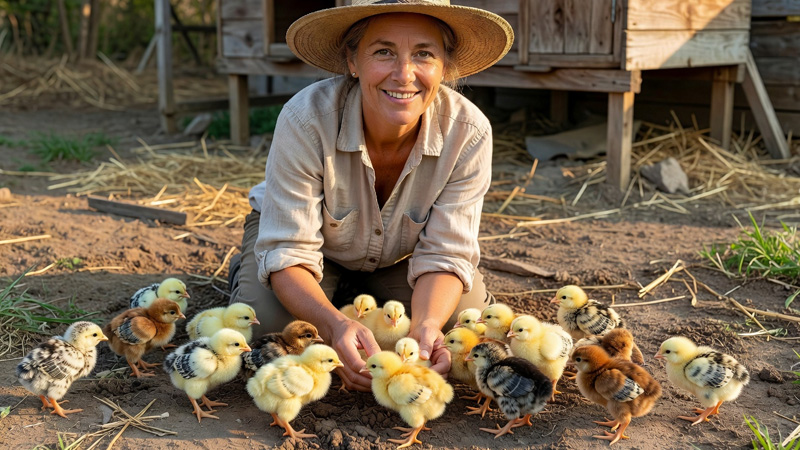
You can buy baby chicks any time of the year.
That part is easy.
The harder part is keeping them healthy once they arrive. Young chicks are sensitive to temperature changes, stress, dirty conditions, and shipping delays. Even experienced chicken keepers lose chicks sometimes when conditions are not right.
Because of that, the season you choose really does matter.
Some months make raising chicks much easier while others demand more work, closer monitoring, and a little luck too.
Table of Contents
- Buy Chicks From a Nearby Hatchery if Possible
- What Temperature Do Baby Chicks Need?
- Raising Baby Chicks in Spring
- Raising Baby Chicks in Summer
- Raising Baby Chicks in Fall
- Raising Baby Chicks in Winter
- Season Matters, but Preparation Matters More
- Keep Emergency Supplies Ready
- What if You Want Chicks as Pets?
- Final Thoughts
Buy Chicks From a Nearby Hatchery if Possible
Before talking about seasons, shipping distance needs attention first.
The farther the chicks travel, the more stress they experience. Long trips increase the chance of dehydration, weakness, and delayed arrivals.
Local hatcheries are usually the safer option.
Shorter shipping means the chicks spend less time inside crowded boxes and unstable temperatures. That alone can improve survival rates.
Reputation matters too. Healthy chicks from a good breeder usually arrive active, alert, and noisy.
What Temperature Do Baby Chicks Need?
Newly hatched chicks cannot control body temperature properly yet.
For the first week, the brooder should stay around 95°F. After that, the temperature can gradually drop every week until the chicks are fully feathered.
Once they reach around six to eight weeks old, most chicks tolerate cooler temperatures much better.
Cold-hardy breeds usually adjust faster than delicate breeds with large combs or thinner feathering.
Heat can become dangerous too.
Adult chickens struggle badly in extreme summer temperatures, especially inside overcrowded coops with poor ventilation.
Raising Baby Chicks in Spring
Spring is usually the easiest and safest season for beginners.
The weather sits in the middle. Not freezing cold. Not dangerously hot either.
That balance helps both hatcheries and chicken keepers.
Chicks raised during spring often grow steadily without dealing with extreme weather stress. By the time winter arrives, they are stronger, larger, and usually fully feathered already.
Spring chicks may also start laying eggs before winter depending on the breed.
Another advantage is availability.
Most hatcheries carry their widest breed selection during spring because demand is highest then.
If you have a specific breed in mind, this is usually the best time to find it.
Raising Baby Chicks in Summer
Summer works well in some situations, though heat becomes the main problem.
Chicks need warmth, but too much heat inside a brooder quickly turns dangerous.
Unlike humans, chickens do not sweat. They cool themselves mainly by panting and spreading their wings away from the body.
Without airflow and shade, heat stress builds fast.
Bacteria and parasites also become more active during hot weather. Wet bedding smells worse and spoils faster too.
Power outages are another concern during summer.
If cooling systems or ventilation stop working during extreme heat, chicks can decline quickly. Fresh water becomes critical during this season.
Still, chicks raised in summer usually have enough time to mature before winter arrives.
Raising Baby Chicks in Fall
Fall can work surprisingly well, especially in warmer climates.
Early fall temperatures are often comfortable enough for raising chicks without constant adjustments.
The challenge comes later.
As winter approaches, younger chicks may still need extra warmth longer than expected.
If you buy chicks during fall, having a dependable brooder setup becomes important because temperatures can shift quickly.
Cold-hardy breeds generally perform better during this season.
One issue many people run into is limited hatchery stock. Some breeders reduce chick availability once spring demand slows down.
You may not find every breed you want by then.
Raising Baby Chicks in Winter
Winter is usually the toughest season for beginners.
Not impossible. Just demanding.
Brooder temperatures must stay stable even when outdoor temperatures drop hard overnight. Heating equipment needs closer monitoring too.
If the brooder becomes too cold, chicks often pile tightly together under the heat source.
That behavior is an immediate warning sign.
Shipping also becomes riskier during winter.
Storms, delayed deliveries, and freezing temperatures create problems hatcheries cannot always control. Some hatcheries even stop shipping completely during severe cold periods.
If you decide to raise winter chicks, choosing cold-hardy breeds helps a lot.
Australorps, Orpingtons, and Rhode Island Reds are usually better choices than heat-sensitive breeds.
Season Matters, but Preparation Matters More
Even the perfect season cannot fix poor preparation.
Before chicks arrive, the brooder should already be ready and tested.
That includes:
- Stable heat source
- Dry bedding
- Clean waterer
- Starter feed
- Proper ventilation
- Enough space
Many beginners focus only on temperature and forget the smaller details.
Dirty bedding, overcrowding, or poor airflow can create health problems in any season.
Keep Emergency Supplies Ready
Young chicks sometimes develop issues without warning.
Pasty butt, spraddle leg, dehydration, and injuries are not uncommon during the first few weeks.
Basic first-aid supplies save time during emergencies.
Most chicken keepers keep antiseptic solution, electrolyte powder, gauze, tweezers, syringes, gloves, and wound ointment nearby.
A small quarantine area also helps if one chick becomes sick.
What if You Want Chicks as Pets?
Then timing becomes personal too.
The best season is when you actually have enough time for them.
Baby chicks imprint easily during their early days. They recognize voices, movement, and routines surprisingly fast.
If you spend time near the brooder calmly and consistently, they usually become more comfortable around people as they grow.
Some chicken keepers even talk softly to their chicks daily so the birds get used to human presence early.
It sounds strange until you see it work.
Chicks raised with regular gentle interaction often become calmer adult birds later.
Final Thoughts
Spring is generally the easiest season for raising baby chicks, especially for beginners.
The weather is milder, hatcheries have more breed options, and chicks usually adapt better overall.
Still, successful chick raising depends on more than the calendar.
Clean conditions, stable warmth, fresh water, proper feed, and daily observation matter every season of the year.
Chicks can become sick quickly, so consistency matters more than perfection.
And having a good veterinarian nearby never hurts either.

