
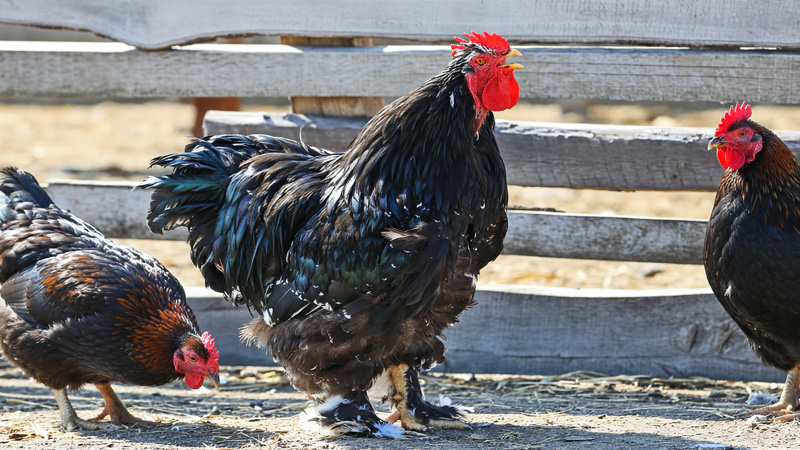
The Jersey Giant is the largest chicken breed in the world, with roosters reaching up to 13 pounds while still being known for their calm and gentle personality.
A lot of people expect these birds to act aggressive because of the name.
Then they actually meet one.
Most Jersey Giants are relaxed, friendly, and weirdly calm for something that looks almost turkey-sized walking around the yard. They’re huge, yes. But they usually behave more like oversized pets than intimidating farm birds.
That’s exactly why so many backyard chicken keepers end up loving them.
Table of Contents
- What Is a Jersey Giant Chicken?
- How Big Are Jersey Giant Chickens?
- Difference Between Jersey Giant and Australorp
- Jersey Giant Temperament and Personality
- Can Jersey Giants Fly?
- Are Jersey Giants Cold Hardy?
- How Many Eggs Do Jersey Giants Lay?
- Are Jersey Giants Good for Meat?
- Feeding Jersey Giant Chickens
- Common Health Problems in Jersey Giants
- How Much Space Do Jersey Giants Need?
- Pros of Raising Jersey Giant Chickens
- Cons of Raising Jersey Giant Chickens
- Are Jersey Giant Chickens Worth Raising?
What Is a Jersey Giant Chicken?
The Jersey Giant is an American dual-purpose chicken breed originally developed in New Jersey between 1870 and 1890 for meat production.
The breed was created by brothers John and Thomas Black in Burlington County, New Jersey.
Their goal was simple. They wanted a chicken large enough to compete with turkeys as a table bird.
To create the breed, they crossed several chickens including:
- Black Java
- Dark Brahma
- Black Langshan
Some breeders believe Black Orpingtons were involved too, although no records fully prove that.
The original name was actually “Black Giants.” Later, the name changed to Jersey Giant to honor the breed’s origin.
The American Poultry Association officially recognized the black variety in 1922.
How Big Are Jersey Giant Chickens?
Adult Jersey Giant roosters can weigh 11 to 13 pounds while hens commonly reach 10 pounds, making them the heaviest standard chicken breed.
These birds are genuinely massive.
Roosters can stand over 2 feet tall and have thick muscular bodies built for meat production.
Their size becomes obvious once they stand beside regular backyard breeds.
Despite the weight, they still move around actively when given enough space.
Most Jersey Giants have:
- Broad chest
- Large muscular thighs
- Single red comb
- Dark brown eyes
- Yellow skin
- Strong black beak with yellow tint
- Black or dark legs
The breed comes in three recognized colors:
- Black
- Blue
- White
Difference Between Jersey Giant and Australorp
Jersey Giants are larger and heavier than Australorps, while Australorps produce significantly more eggs yearly.
People confuse these two breeds constantly because both can have black feathers and dark legs.
But Jersey Giants are noticeably bulkier once mature.
There are smaller details too.
Jersey Giants usually have yellow coloring underneath their feet, while Australorps often show pinkish-white bottoms.
Australorps are better production layers overall, but Jersey Giants still hold the title for largest chicken breed.
Jersey Giant Temperament and Personality
Jersey Giant chickens are calm, docile, family-friendly birds often called “gentle giants” because of their relaxed behavior.
Honestly, temperament is one of the breed’s best qualities.
They usually do well around children and rarely create trouble in mixed flocks.
Even roosters are often more tolerant than expected.
They respect flock hierarchy instead of constantly challenging other birds.
Still, they are protective.
If another animal threatens chicks or attacks them aggressively, Jersey Giants absolutely can defend themselves.
One thing owners notice quickly though is the noise.
These chickens can be surprisingly vocal.
Sometimes they complain loudly for reasons only they understand.
Can Jersey Giants Fly?
Jersey Giant chickens are poor flyers because of their enormous body weight and usually only manage short low flights.
Most fences do not need to be especially tall.
Even though they technically can jump several feet when startled, they generally prefer staying grounded.
Their heavy body makes balancing harder too, especially while running quickly.
Are Jersey Giants Cold Hardy?
Jersey Giant chickens handle cold weather extremely well but can struggle during intense summer heat.
Their dense feathers and large body mass help them tolerate freezing temperatures better than many lighter breeds.
However, large combs still create frostbite risk during harsh winters.
Summer is actually more difficult for them.
Heavy birds overheat faster.
Shade, ventilation, and lots of clean water become very important once temperatures rise.
How Many Eggs Do Jersey Giants Lay?
Jersey Giant hens usually lay around 160 large brown eggs per year and may begin laying at about 6 months old.
They are decent layers for such a large breed.
Not elite production hens, but definitely better than many giant meat-focused chickens.
The eggs are often extra large with thick brown shells.
Some hens lay darker eggs while others produce lighter brown shades.
Incubation also takes slightly longer than average. Eggs commonly hatch around day 22 instead of day 21.
Are Jersey Giants Good for Meat?
Jersey Giants were originally created for meat production and produce lean flavorful meat, although they grow slower than modern meat breeds.
This is the breed’s biggest tradeoff.
You get massive birds, but you wait longer.
Most Jersey Giants need around 8 to 9 months before reaching good processing weight.
Commercial broilers grow dramatically faster, which is why Jersey Giants became less common in industrial farming.
Still, many homesteaders prefer the flavor and size of mature Jersey Giant meat birds.
Feeding Jersey Giant Chickens
Jersey Giant chickens require more feed than average breeds because of their large body size and slower growth rate.
These birds eat a lot.
There’s no way around that part.
Growing birds especially need steady protein intake to support muscle and feather development.
Many owners feed them two or three times daily while also allowing free ranging whenever possible.
Laying hens consume noticeably more feed compared to lighter egg breeds.
Common Health Problems in Jersey Giants
Jersey Giants are generally healthy chickens, but obesity, overheating, and frostbite can become issues if management is poor.
The breed itself does not carry many serious genetic health concerns.
Their biggest problems usually come from size.
Heavy birds need:
- Flat walking areas
- Strong leg support
- Dry bedding
- Proper ventilation
- Extra summer cooling
Because they are large and heavy, falls can sometimes injure legs or feet if roosts are too high.
How Much Space Do Jersey Giants Need?
Jersey Giant chickens need roughly 6 to 8 square feet of coop space per bird because of their massive body size.
Crowded housing does not work well for this breed.
Nesting boxes should also be larger than standard sizes so hens can sit comfortably without crushing eggs accidentally.
Low roosts are safer too.
These birds are heavy enough that jumping from tall roost bars can injure feet or legs over time.
Pros of Raising Jersey Giant Chickens
Jersey Giants combine giant size, calm behavior, cold hardiness, and meat production into one impressive backyard breed.
- Very gentle personality
- Excellent meat size
- Large brown eggs
- Cold hardy
- Rarely aggressive
- Good free rangers
- Protective mothers
- Low flying ability
Cons of Raising Jersey Giant Chickens
The main disadvantages of Jersey Giants are feed cost, slower growth, space requirements, and heat sensitivity.
- Consume large amounts of feed
- Require extra coop space
- Grow slowly
- Can overheat in summer
- May accidentally break eggs
- Not ideal for small city spaces
- Can become noisy
Are Jersey Giant Chickens Worth Raising?
If you want huge friendly chickens that provide both meat and eggs while staying calm around people, Jersey Giants are absolutely worth considering.
They are not cheap birds to maintain.
Feed costs alone will be higher than average.
But people who raise them usually understand that before starting.
You keep Jersey Giants because they’re impressive. Massive birds with surprisingly gentle personalities are hard to ignore once you see them walking around the yard.
And honestly, very few chicken breeds attract attention faster.

