
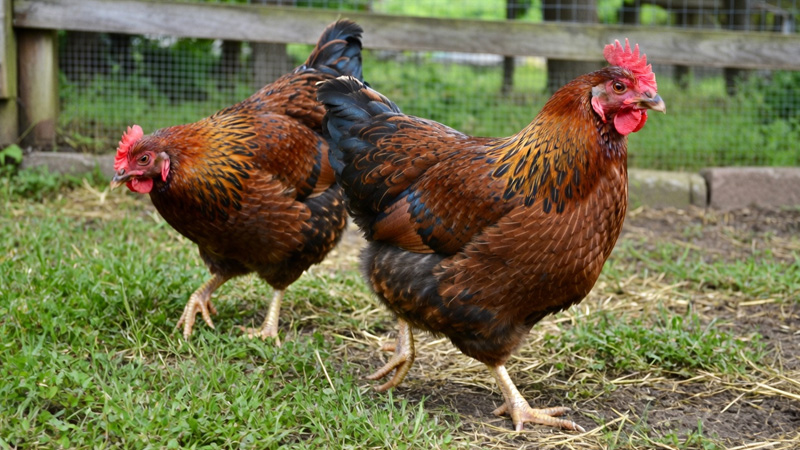
Welsummer chickens are calm dual-purpose birds known for their dark terracotta brown eggs, cold hardiness, and friendly backyard temperament.
Most people recognize the breed because of the eggs first. Deep brown. Sometimes speckled. Honestly, some look almost painted.
But the eggs are not the only reason people end up liking Welsummers. These chickens are smart, relaxed, easy to manage, and they fit nicely into backyard flocks without causing too much drama.
They are also the breed behind Kellogg’s famous rooster mascot, Cornelius.
That surprises a lot of people.
Table of Contents
- What Is a Welsummer Chicken?
- Welsummer Chicken Appearance
- How Many Eggs Do Welsummer Chickens Lay?
- Welsummer Temperament and Personality
- Are Welsummer Chickens Good Free Rangers?
- Cold and Heat Tolerance
- Are Welsummers Broody?
- What Is an Autosexing Welsummer?
- Common Health Problems in Welsummers
- Pros of Raising Welsummer Chickens
- Cons of Raising Welsummer Chickens
- Are Welsummer Chickens Worth Raising?
What Is a Welsummer Chicken?
The Welsummer is a medium-heavy Dutch chicken breed originally developed for both meat and egg production shortly after World War I.
The breed came from the village of Welsum in the Netherlands. Breeders mixed several chickens together including Rhode Island Reds, Partridge Cochins, Wyandottes, and Leghorns to create a durable bird that could lay dark eggs while still producing decent meat.
They became popular fast after appearing at the World Poultry Congress in 1921.
England imported them a few years later, then the United States followed.
Even though they are common in many backyard flocks today, Welsummers still somehow feel underrated compared to bigger-name breeds.
Welsummer Chicken Appearance
Adult Welsummer hens usually weigh around 6 pounds while roosters average close to 7 pounds with rich brown partridge-colored feathers.
The feather pattern is one of the breed’s strongest features.
Photos honestly don’t always show how nice they look in person. The feathers have layers of brown, black, gold, and chestnut tones that shift slightly under sunlight.
Roosters especially stand out.
They usually have:
- Chestnut hackle feathers
- Black-green tail feathers
- Golden neck highlights
- Bright red comb and wattles
- Yellow legs without feathering
- Reddish bay eyes
Welsummers carry themselves upright and have a broad, balanced body shape.
They look active without appearing nervous.
How Many Eggs Do Welsummer Chickens Lay?
Welsummer hens typically lay 160 to 250 dark brown eggs yearly, although highly productive birds are sometimes considered less genetically pure.
This breed became famous largely because of egg color.
The eggs are usually deep brown with a terra cotta shade. Some hens lay speckled eggs too.
One interesting thing about Welsummer eggs is the pigment can rub off slightly if handled roughly or washed aggressively.
That dark coating is added near the end of the laying process.
Production slows during winter for most hens, but they usually return strongly once daylight hours increase again.
The eggs are medium to large in size and often look darker than standard brown supermarket eggs.
Welsummer Temperament and Personality
Welsummers are intelligent, calm, friendly chickens that usually fit well into mixed backyard flocks.
They’re social without being clingy.
Many owners say their birds willingly approach for treats and quickly learn routines around feeding time.
They are not usually aggressive toward people or flock mates.
That said, they are definitely vocal birds.
Some hens like announcing everything they do. If something annoys them, there’s a good chance the entire neighborhood will hear about it.
Still, they tend to rank somewhere around the middle of the pecking order and generally avoid constant fighting.
Are Welsummer Chickens Good Free Rangers?
Welsummers are excellent foragers and do very well in free-range environments while still tolerating confinement reasonably well.
They enjoy searching for insects, seeds, and small plants throughout the yard.
Because they are not strong flyers, fencing does not need to be extremely high to contain them.
Their natural coloring also helps them blend into outdoor surroundings better than lighter-colored breeds.
That gives them a little extra protection from predators while ranging.
Cold and Heat Tolerance
Welsummer chickens handle cold weather very well and can also tolerate moderate heat if shade and cool water are available.
They generally perform best in cooler climates.
The only major winter concern is frostbite on large combs and wattles, especially in roosters.
Good coop ventilation matters during winter because trapped moisture increases frostbite risk quickly.
In hotter climates, shade becomes important because darker feather colors absorb heat faster during summer afternoons.
Are Welsummers Broody?
Welsummer hens are not known for strong broodiness and are usually considered poor mothers compared to dedicated broody breeds.
For many backyard owners, that’s actually helpful.
You get egg production without hens constantly stopping to sit on nests.
If you plan to hatch chicks naturally though, you’ll probably want another breed handling incubation duties.
What Is an Autosexing Welsummer?
Welsummer chicks are autosexing, meaning males and females can often be identified shortly after hatching based on feather markings and head color.
Female chicks usually appear darker with more defined markings on the head and back.
Males often look lighter and fuzzier in comparison.
This is different from sex-link chickens.
Autosexed birds come from parents of the same breed and still produce purebred offspring.
That makes Welsummers especially interesting to breeders and homesteaders.
Common Health Problems in Welsummers
Welsummers are considered a hardy and healthy chicken breed with very few breed-specific health problems.
Outside of standard poultry issues like mites, lice, or worms, they usually stay strong when kept in good conditions.
The biggest thing to watch is frostbite during winter because of the larger combs on roosters.
With proper care, many Welsummers live around 7 to 9 years.
Pros of Raising Welsummer Chickens
Welsummers combine attractive dark eggs, calm personalities, good foraging ability, and reliable hardiness into one balanced backyard breed.
- Beautiful dark brown eggs
- Friendly and intelligent temperament
- Good dual-purpose size
- Strong cold tolerance
- Excellent free rangers
- Easy to contain
- Autosexing chicks
Cons of Raising Welsummer Chickens
The main downsides of Welsummers are noise, limited broodiness, and inconsistent egg production between bloodlines.
- Can be noisy
- Not ideal mothers
- Egg numbers vary heavily
- Roosters prone to frostbite
- Less common than commercial breeds
Some birds also become less productive as they age if they are pushed too hard without seasonal laying breaks.
Are Welsummer Chickens Worth Raising?
If you want a hardy backyard chicken that lays dark eggs and stays calm around people, Welsummers are absolutely worth considering.
They are practical birds but still have personality.
That balance is probably why so many backyard keepers stay loyal to the breed once they start raising them.
They forage well, don’t usually create trouble in mixed flocks, and the eggs honestly look fantastic in a basket.
Not every breed manages to combine appearance, productivity, and temperament this cleanly.

