
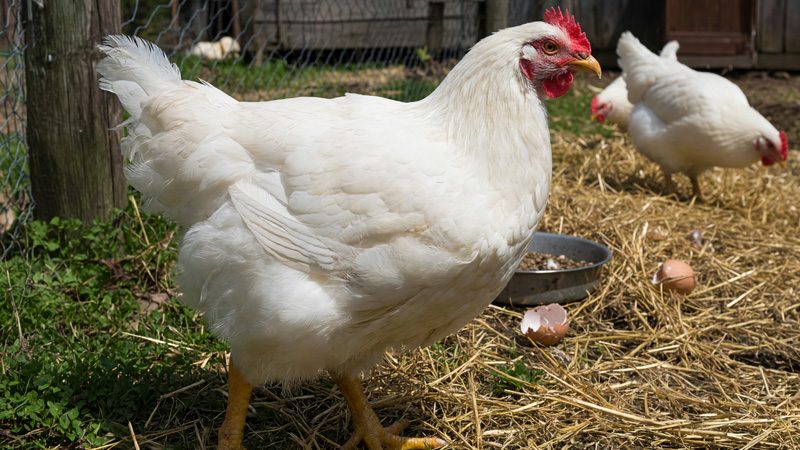
Leghorn chickens are one of the best egg-laying breeds in the world, producing around 280 to 320 white eggs yearly while consuming less feed than most chickens.
That’s the main reason commercial egg farms love them.
They lay a lot. They eat less. They mature fast.
Simple.
But once you actually raise Leghorns, you quickly realize they are very different from calm backyard pet breeds. These birds are energetic, loud, independent, and honestly a little dramatic sometimes.
Some people love that personality.
Others absolutely do not.
Table of Contents
- Where Did Leghorn Chickens Come From?
- What Do Leghorn Chickens Look Like?
- How Big Are Leghorn Chickens?
- Leghorn Chicken Temperament
- Are Leghorns Good for Backyard Flocks?
- Are Leghorn Chickens Friendly?
- How Many Eggs Do Leghorns Lay?
- Are Leghorns Good for Meat?
- Heat and Cold Tolerance
- What Do Leghorns Eat?
- Common Health Problems in Leghorns
- How to Care for Leghorn Chickens
- Pros of Raising Leghorn Chickens
- Cons of Raising Leghorn Chickens
- Are Leghorn Chickens Worth Raising?
Where Did Leghorn Chickens Come From?
Leghorn chickens originated from Livorno, Italy, and later became one of the most important commercial egg breeds in the United States and England.
The breed was first called “Italians” before the English version of Livorno, which is “Leghorn,” became the official name.
Leghorns arrived in America around the 1850s after traders imported them from Italy.
At first, they were smaller birds.
English breeders later crossed them with Minorcas to improve body size and overall performance. After that, the breed exploded in popularity.
Today, most white eggs sold in supermarkets come from Leghorn-type chickens.
What Do Leghorn Chickens Look Like?
Leghorn chickens are lightweight Mediterranean birds with upright posture, large combs, yellow legs, white earlobes, and long elegant tails.
They look active even when standing still.
The body is slim compared to heavier backyard breeds, and their tails are usually carried high.
Most Leghorns have:
- Large single or rose comb
- Bright red wattles
- White earlobes
- Yellow skin and legs
- Long upright tail
- Lean lightweight body
White Leghorns are by far the most common variety, especially in commercial settings.
The American Poultry Association recognizes 16 color varieties, including:
- White
- Light Brown
- Dark Brown
- Black
- Buff
- Silver
- Red
- Columbian
Rose Comb Leghorns are harder to find than Single Comb strains.
How Big Are Leghorn Chickens?
Adult Leghorn roosters usually weigh 7 to 8 pounds while hens average around 5 to 6 pounds.
Compared to giant breeds, Leghorns are relatively small.
That smaller body size actually helps them convert feed into eggs efficiently.
They also mature quickly compared to many heavier dual-purpose breeds.
Leghorn Chicken Temperament
Leghorns are highly energetic, intelligent, independent chickens that usually dislike excessive handling.
This is the part many beginners misunderstand.
Leghorns are not cuddly backyard pets.
Most do not enjoy being picked up constantly. Some hens tolerate it. Many simply avoid people whenever possible.
They stay alert almost all the time and react quickly to movement or noise.
That nervous energy makes them excellent survival birds but not ideal lap chickens.
They can also become noisy.
Very noisy sometimes.
Hens announce eggs loudly and roosters are not exactly quiet either.
Are Leghorns Good for Backyard Flocks?
Leghorns work well in backyard flocks if owners want high egg production and do not expect calm pet-like behavior.
These birds prefer space.
If overcrowded, they may begin feather pecking or become stressed.
They also dislike feeling trapped.
One thing Leghorns are very good at is escaping.
They fly surprisingly well and can clear fences much easier than heavier breeds.
A proper covered run or tall fencing matters with this breed.
Are Leghorn Chickens Friendly?
Leghorns are not aggressive toward humans, but they are usually more independent than affectionate.
That doesn’t mean they are mean chickens.
They simply prefer doing their own thing.
Many experienced poultry keepers actually appreciate this because Leghorns require less emotional attention compared to breeds constantly seeking interaction.
For families with very young children though, calmer breeds may be easier.
How Many Eggs Do Leghorns Lay?
Leghorn hens can lay between 280 and 320 white eggs per year, making them one of the most productive egg breeds available.
This is where Leghorns dominate.
Most hens begin laying around 5 months old and continue heavily for several years.
Eggs are usually:
- White
- Medium to large
- Consistent in shell quality
White Leghorns generally outperform colored varieties in production.
It’s one reason commercial farms heavily prefer them.
Are Leghorns Good for Meat?
Leghorns are technically dual-purpose chickens, but they are mainly raised for eggs rather than meat production.
Their bodies are smaller and leaner compared to meat-focused breeds.
You can still process them for meat, especially older laying hens, but that’s not the breed’s primary strength.
Egg production is clearly the focus.
Heat and Cold Tolerance
Leghorn chickens tolerate hot climates very well and also handle cold weather reasonably well, especially Rose Comb varieties.
Because they came from Mediterranean stock, they manage warm weather better than many fluffy heavy breeds.
They still need shade and ventilation though.
During winter, Single Comb Leghorns face higher frostbite risk because of their large combs.
Rose Comb strains perform better in colder climates for this reason.
What Do Leghorns Eat?
Leghorns consume less feed than most chicken breeds while still maintaining extremely high egg production.
That efficiency is part of what made them commercially valuable worldwide.
They are also excellent foragers and actively search for insects and greens when allowed to free range.
A balanced layer feed with proper calcium is usually enough for adult hens.
They do not need excessive feeding because their smaller bodies fill up quickly.
Common Health Problems in Leghorns
Leghorns are generally hardy chickens with few major health issues besides possible frostbite and common poultry parasites.
The breed is naturally active and rarely struggles with obesity.
The biggest concern usually involves comb frostbite during harsh winters.
Otherwise, they are considered durable birds overall.
How to Care for Leghorn Chickens
Leghorns need secure fencing, enough roaming space, proper ventilation, and low-stress flock management to stay productive.
These birds hate overcrowding.
Seriously.
If space becomes too tight, pecking problems can appear fast.
Good ventilation matters too because active birds produce plenty of heat and moisture inside coops.
Since they fly well, many owners use covered runs or taller fences to prevent escapes.
Pros of Raising Leghorn Chickens
Leghorns are economical, highly productive egg layers that require less feed than most breeds.
- Excellent egg production
- Fast maturity
- Light feed consumption
- Strong heat tolerance
- Excellent foragers
- Very hardy overall
- Active and intelligent
Cons of Raising Leghorn Chickens
The biggest downsides of Leghorns are noise, nervous behavior, flightiness, and weak broodiness.
- Can be extremely noisy
- Not cuddly birds
- Fly over fences easily
- Not ideal for small children
- Poor mothers
- Can become stressed in confinement
- Less beginner-friendly than calm breeds
Are Leghorn Chickens Worth Raising?
If your main goal is maximum egg production with lower feed costs, Leghorns are one of the best chicken breeds you can raise.
They are practical birds.
Not emotional support chickens.
People expecting cuddly backyard pets sometimes end up disappointed because Leghorns prefer independence.
But if you want efficient egg machines that stay active, alert, and productive almost year-round, few breeds compete with them.
There’s a reason they became the foundation of modern commercial egg farming.

