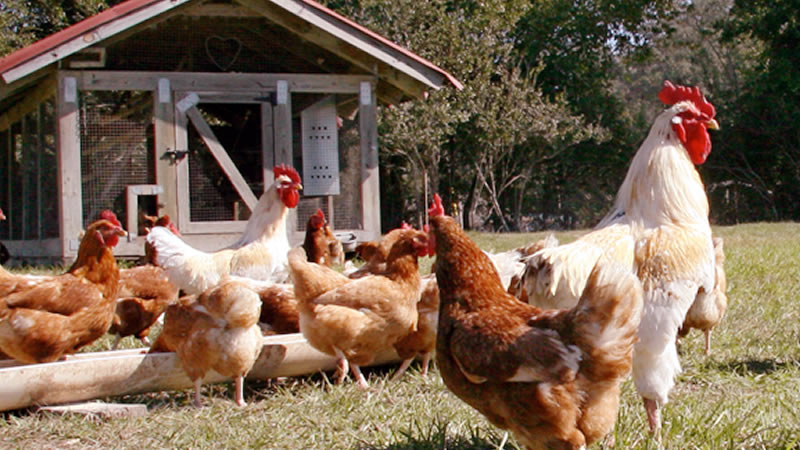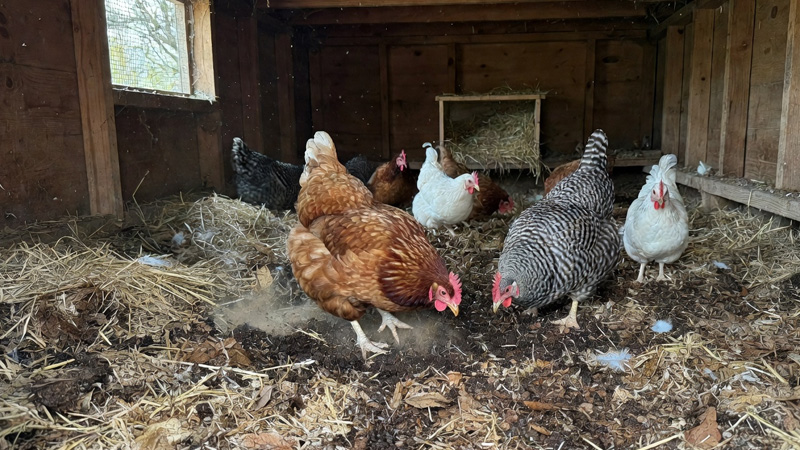
Cleaning a chicken coop every single week is not the only way to keep chickens healthy. In fact, many backyard chicken owners only clean out their coop once or twice a year by using the deep litter method, a bedding system that slowly composts chicken manure right inside the coop.
It sounds messy at first. Honestly, most people think it will smell terrible or attract disease. But when done correctly, it usually does the opposite. The coop stays drier, smells less, and chickens stay busy scratching through the bedding all day.
That said, deep litter is not a “set it and forget it” system. You still need to manage moisture, ventilation, and bedding materials properly or things can go wrong pretty fast.
Table of Contents
- What Is the Deep Litter Method?
- Why Many Chicken Owners Prefer Deep Litter
- How Deep Litter Creates Heat During Winter
- Best Bedding Materials for Deep Litter
- Ventilation Matters More Than People Think
- How to Start the Deep Litter Method
- How Often Should You Clean a Deep Litter Coop?
- Advantages of the Deep Litter Method
- Disadvantages of the Deep Litter Method
- Common Mistakes That Cause Deep Litter Problems
- Is the Deep Litter Method Worth It?
What Is the Deep Litter Method?
The deep litter method is a coop management system where chicken manure and bedding slowly decompose together over several months instead of being removed constantly.
Rather than cleaning out droppings every few days, you keep adding fresh carbon-rich bedding on top of old litter. Over time, the lower layers begin composting naturally.
People have been using this method for decades. It became popular with poultry farmers in the 1940s and is still widely used today in backyard coops and small farms.
The process is simple:
- Chicken manure builds up gradually
- Dry bedding absorbs moisture and nitrogen
- Chickens scratch and mix everything together
- Microbes slowly break the material down
Eventually, the litter turns into dark compost-like material that can later be used in the garden.
Why Many Chicken Owners Prefer Deep Litter
A properly managed deep litter system can reduce odor, lower cleaning frequency, produce compost, and even generate natural warmth during winter.
That’s the main reason many chicken keepers switch to it. Less cleaning. Less wasted bedding. Less smell.
But another thing people notice is how much chickens enjoy it. Chickens naturally love scratching through loose material looking for bugs, grains, and tiny bits of organic matter. Deep litter gives them something to do all day.
Some flocks become less stressed and less destructive because they stay occupied longer.
How Deep Litter Creates Heat During Winter
As manure and bedding break down, microbial activity creates low levels of natural heat that help warm the coop during cold weather.
It works somewhat like a compost pile.
When microbes start decomposing organic matter, they generate heat. In winter, this can help take the edge off freezing temperatures inside the coop.
No, it will not turn the coop into a sauna. But it can make the environment noticeably warmer compared to bare flooring or thin bedding.
This is why many people start their deep litter system during spring or early summer. By winter, the lower layers are already active and decomposing properly.
Best Bedding Materials for Deep Litter
Dry, carbon-rich, absorbent bedding works best for deep litter systems.
Not every material is suitable though. Some hold too much moisture while others create harmful dust.
Good Bedding Materials
- Pine shavings
- Dry leaves
- Grass clippings
- Rice hulls
- Peanut hulls
- Straw
- Shredded paper
Pine shavings are probably the most common because they absorb moisture well and are easy to find in many places.
Materials You Should Avoid
Sawdust
Fine sawdust can create dust problems inside the coop. Chickens breathe it in easily, especially in enclosed spaces.
It also tends to hold moisture too long.
Coconut Husk
Some people try coconut husk because it’s cheap and airy, but it may contain excess salt and offers very little nutritional value once composted.
Diatomaceous Earth
Diatomaceous earth can kill parasites, yes. But it can also dry out beneficial microbes needed for decomposition.
Too much of it may interfere with the composting process.
Ventilation Matters More Than People Think
Poor ventilation is one of the fastest ways to ruin a deep litter system.
Chicken manure contains a lot of moisture and nitrogen. Once droppings become wet, ammonia starts forming.
If you walk into the coop and immediately smell strong ammonia, something is wrong.
Usually it means:
- The bedding is too wet
- The coop lacks airflow
- There is not enough dry carbon material
Good ventilation allows moisture and gases to escape before they build up.
A healthy deep litter coop should smell earthy, not sharp or sour.
How to Start the Deep Litter Method
Start With a Thick Bedding Layer
Begin with around 4 to 6 inches of dry bedding and continue adding fresh layers whenever the surface becomes damp or compacted.
Deeper bedding usually works better than shallow bedding.
Once chickens start scratching around, manure and bedding begin mixing naturally. You can help by turning the litter with a rake every week or so.
Some people toss scratch grains into the bedding just to encourage chickens to dig through it more aggressively.
Keep the Litter Dry
This part matters a lot.
Wet bedding quickly becomes dangerous for chickens. It can lead to ammonia buildup, flies, parasites, foot problems, and respiratory issues.
Fix leaking waterers immediately. Remove soaked patches before they spread.
If the litter starts clumping together heavily, break it apart with a rake and add more dry material.
Don’t Let the Coop Become Overcrowded
Overcrowding creates excess manure faster than the bedding can handle it.
Average-sized chickens usually need at least 4 square feet each inside the coop.
Bantams can manage with less space, while larger breeds often need more.
Too many chickens in a small coop almost always causes moisture problems.
How Often Should You Clean a Deep Litter Coop?
Most deep litter coops only need a full cleanout every 6 to 12 months.
That’s one of the biggest advantages.
Instead of weekly deep cleaning, you mainly maintain the bedding by turning it and adding fresh dry layers as needed.
When the litter becomes too deep, usually around 8 to 12 inches, you can start removing portions gradually.
Many chicken keepers fully clean the coop once spring arrives, then restart the process again.
Some leave a thin base layer behind to preserve beneficial microbes.
Advantages of the Deep Litter Method
The deep litter method saves time, reduces waste, lowers odor, and creates useful compost.
- Less frequent coop cleaning
- Lower bedding costs
- Reduced ammonia smell when managed correctly
- Natural winter warmth
- Produces compost for gardens
- Keeps chickens active and entertained
- Can reduce flies and mosquitoes
- Supports beneficial microbes inside the coop
Many chicken keepers also notice the coop floor stays softer and more insulated during colder months.
Disadvantages of the Deep Litter Method
Deep litter can fail badly if moisture, ventilation, or bedding quality are neglected.
This method is not perfect for every setup.
- Beginners sometimes struggle balancing moisture levels
- Bad ventilation can create dangerous ammonia buildup
- Summer heat may become an issue in hot climates
- Some coops cannot handle deep bedding layers
- Cleaning day becomes heavier and more labor-intensive
- Small flocks may not mix the litter effectively
If you already have drainage problems or a very humid coop, deep litter might require extra management.
Common Mistakes That Cause Deep Litter Problems
Most deep litter failures happen because the bedding becomes too wet or compacted.
People often assume they can simply ignore the coop for months. That’s usually when things start smelling awful.
Watch out for these common mistakes:
- Adding fresh bedding too late
- Poor coop ventilation
- Water leaks inside the coop
- Using low-quality bedding
- Allowing litter to cake heavily
- Overcrowding chickens
If the bedding smells strongly of ammonia, stop and fix the issue immediately. Chickens are very sensitive to poor air quality.
Is the Deep Litter Method Worth It?
Yes, the deep litter method works very well for many chicken keepers when managed properly.
It saves time, reduces cleaning frequency, and creates valuable compost while helping chickens stay active and warm during colder months.
Still, it’s not a lazy system.
You need to monitor moisture levels, turn the bedding occasionally, and maintain proper airflow inside the coop.
Once you understand the balance though, it becomes much easier to manage than constant full cleanouts.
And honestly, many chicken owners never go back after trying it.