
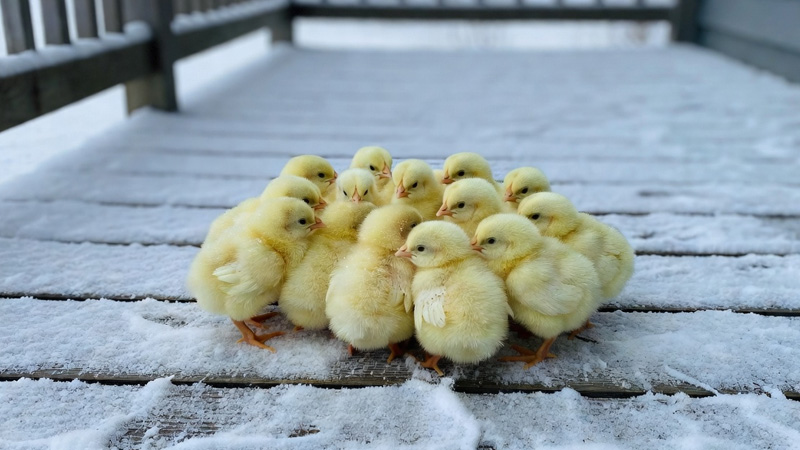
Raising baby chicks during winter is not the easiest choice, especially for beginners. Many experienced chicken keepers will even tell you to wait until spring, and honestly, they have a point.
Baby chicks are fragile. Cold weather, drafts, frozen water, and sudden temperature changes can quickly become dangerous for them.
Still, raising chicks in winter is not impossible. With the right setup, enough heat, proper bedding, and close monitoring, your chicks can survive the cold season and grow into strong, healthy chickens.
There are even some advantages to winter chick raising. By the time warmer months arrive, your birds may already be old enough to enjoy the outdoors, and some pullets may begin laying earlier in the season.
This guide explains how to raise chicks safely in winter, from choosing the right breeds to managing brooders, heat, bedding, water, feeders, and coop transfer.
Table of Contents
- 1. Choose Cold-Hardy Chicken Breeds
- 2. Consider Buying Chicks in a Larger Group
- 3. Spring Is Still the Best Season for Raising Chicks
- 4. Buy Baby Chicks Locally When Possible
- How to Raise Chicks in a Brooder During Winter
- 1. Use a Larger Brooder
- 2. Use Warm and Safe Bedding
- 3. Keep the Brooder Warm Enough
- 4. Keep Chicks Warm Without Creating Fire Risks
- 5. Use Safe Feeders and Waterers
- Moving Chicks to the Coop During Winter
- Provide Low Roosting Bars
- Keep Feed and Water Close to Warm Areas
- Conclusion
1. Choose Cold-Hardy Chicken Breeds
If you live in a cold region, breed selection matters a lot.
Cold-hardy chickens are not completely immune to freezing weather, but they are usually better equipped to handle lower temperatures. Many of them have smaller combs and wattles, which makes them less prone to frostbite.
Some cold-hardy breeds also develop thick, fluffy feathers as adults, giving them better insulation during winter.
Good cold-hardy chicken breeds include:
- Ameraucana
- Australorp
- Barred Rock
- Brahma
- Cochin
- Delaware
- Rhode Island Red
- Orpington
Starting with cold-hardy chicks gives you a better chance of success, especially if winters in your area are harsh.
2. Consider Buying Chicks in a Larger Group
Buying chicks in bulk may not make sense if you only want two or three birds. But during winter, having a larger group can help keep chicks warmer.
More chicks generate more shared body heat inside the brooder.
This does not mean you can reduce brooder heating carelessly, but it does help create a warmer group environment.
Once they are old enough to move to the coop, a larger group can also help each other stay warm during cold nights.
However, do not buy more chicks than you can properly house, feed, and care for. Overcrowding creates its own problems.
If you only want a few chicks and do not want the extra winter work, spring is still the easier season to start.
3. Spring Is Still the Best Season for Raising Chicks
Even though winter chick raising is possible, spring remains the most beginner-friendly season.
Chicks raised in spring usually face fewer cold-related problems. The weather is milder, shipping is safer, and the transition from brooder to coop is much easier.
Spring chicks also have more time to grow before winter arrives.
By the time cold weather returns, they are usually fully feathered pullets or young adults. This makes them much more prepared for low temperatures.
So if you are not in a hurry, spring is still the safer and simpler option.
4. Buy Baby Chicks Locally When Possible
If you decide to raise chicks in winter, try to buy from a local hatchery or nearby breeder.
Long-distance shipping can be stressful for chicks even during mild weather. In winter, the risk becomes much higher because delays, cold exposure, and rough transport can weaken or kill them.
Buying locally means:
- Shorter travel time
- Less shipping stress
- Lower risk of chilling
- Better chance of healthy arrivals
Always ask where the chicks originally came from. Some local sellers may still be reselling birds shipped from distant hatcheries.
How to Raise Chicks in a Brooder During Winter
Baby chicks cannot regulate body heat properly during their early weeks. Their bodies are small, and their feathers are not yet fully developed.
This is why the brooder setup becomes extremely important in winter.
1. Use a Larger Brooder
A newborn chick usually needs at least half a square foot of brooder space during the first few days.
But chicks grow fast. Really fast.
By 4 to 8 weeks old, each chick may need around one square foot of space or more. By 12 to 16 weeks, larger breeds may need up to two square feet each.
During winter, extra space is useful because chicks need room to move closer to or farther away from the heat source.
If the brooder is too small, chicks may be forced into areas that are too hot or too cold.
How to Make a Simple DIY Brooder
You do not always need to buy an expensive brooder.
You can make one using:
- A large plastic tub
- A galvanized metal tub
- A wooden crate
- A clean old aquarium
- A large cardboard box
Cardboard boxes are especially useful because they are easy to expand. You can connect another box as the chicks grow.
For the top cover, use wire mesh or fencing material. This allows airflow while keeping chicks safely inside and predators out.
2. Use Warm and Safe Bedding
Bedding does more than keep the brooder clean. In winter, it also helps chicks stay warm and dry.
Good bedding options include:
- Pine shavings
- Straw
- Hay
- Clean sand
- Paper towels for the first few days
Avoid using whole sheets of newspaper as the main bedding. Newspaper is slippery and may cause spraddle leg in young chicks.
If you want to use newspaper, place it underneath a proper bedding layer instead.
Also avoid cedar chips and aromatic wood shavings. These can release oils and fumes that may irritate or harm baby chicks.
3. Keep the Brooder Warm Enough
Temperature control is the most important part of raising chicks in winter.
During the first week, brooder temperature should usually stay between 90°F and 95°F. In winter, it is safer to aim closer to 95°F during the first several days.
After the first week, reduce the temperature by about 5°F each week.
Chicks usually remain in the brooder until they are around 6 weeks old or fully feathered. Some may need more time during cold weather.
Never rush them into the coop if the outside temperature is still too harsh.
4. Keep Chicks Warm Without Creating Fire Risks
Heat is necessary, but brooder fires are a real danger.
Many chicken keepers use heat lamps, brooder plates, or safe heating systems designed specifically for chicks.
If using bulbs, keep them securely fastened and away from bedding, cardboard, curtains, or any flammable material.
A second backup heat source is also useful during winter in case the first one fails overnight.
Some keepers partially cover the brooder with cardboard or cloth to help retain warmth, but never block all airflow. Chicks still need ventilation.
How to Know If Chicks Are Warm Enough
A thermometer helps, but your chicks will also tell you how they feel through their behavior.
If chicks are comfortable, they will move around, eat, drink, sleep calmly, and spread themselves naturally around the brooder.
If they are too cold, they will huddle tightly under the heat source and may chirp loudly.
If they are too hot, they will move away from the heat, stay near the brooder walls, pant, act weak, or droop their heads.
Check on them often, especially during the first week.
5. Use Safe Feeders and Waterers
Newly hatched chicks can survive for about 24 to 48 hours without food because they still absorb nutrients from the egg yolk before hatching.
But once they arrive in the brooder, they should have access to chick starter feed and clean water.
During winter, keeping chicks dry is just as important as feeding them.
Use shallow chick feeders that are easy for them to access. Keep feeders clean and avoid letting chicks stand inside them because droppings can contaminate the feed.
For waterers, use chick-safe containers. Adding small clean pebbles to shallow water dishes can reduce the risk of accidental drowning.
Place feeders and waterers near the warm area, but not directly under the heat source. Water that becomes too hot or spills into bedding can create problems.
Always remove wet bedding quickly. A wet chick can chill fast, even inside a brooder.
Moving Chicks to the Coop During Winter
Chicks can usually move from the brooder to the coop when they are about 6 weeks old and fully feathered.
But winter changes the timing.
Even fully feathered chicks may struggle if the temperature difference between the brooder and coop is too sudden.
Before moving them, make sure the coop is:
- Dry
- Draft-free
- Well-ventilated
- Predator-proof
- Warm enough for young birds
In cold weather, the coop temperature should be more comfortable than it would need to be for mature adult chickens. Supplemental heat may be necessary, but it must be installed safely.
Avoid placing young chicks immediately with a large flock of adult chickens. Bigger birds may bully, injure, or accidentally trample them.
If possible, give the chicks a separate section of the coop where they can see the adult flock without being attacked.
Provide Low Roosting Bars
As chicks grow, they begin practicing how to perch and fly short distances.
Low roosting bars help them build confidence without risking injury.
Keep roosts close to the ground at first, especially for heavier breeds.
High roosts are not necessary for young birds and can cause leg or foot injuries if they fall.
Keep Feed and Water Close to Warm Areas
When chicks first move to the coop in winter, they may avoid cold corners.
Place feeders and waterers where they can easily reach them without leaving the warmer area for too long.
Check water often because it can freeze quickly in cold weather.
If freezing is a regular problem, consider using a heated water base designed for poultry.
Conclusion
Raising chicks in winter is challenging, but it can be done safely with proper planning and daily attention.
The biggest priorities are warmth, dryness, clean bedding, safe water, good ventilation, and protection from sudden temperature changes.
Winter chicks need more monitoring than spring chicks, and beginners should be ready for that extra work.
Still, if you choose cold-hardy breeds, buy locally when possible, maintain a safe brooder temperature, and move them to the coop only when they are ready, your chicks can grow strong even during cold months.
It takes patience, no doubt. But watching tiny chicks survive winter and grow into healthy young chickens can be very rewarding.

