Just like humans, chickens need a constant supply of clean and fresh water every single day. In fact, water is even more important to chickens than feed for short-term survival.
Many beginners think giving water to chickens is simple. You just fill a container and that’s it. But once you start raising chickens, you quickly realize there is more to it than that.
How much water does a chicken actually need? What happens if chickens stop drinking? Which type of waterer works best? And how do you know if your flock is getting enough water during hot weather?
These are important questions because poor water management can affect egg production, growth, health, and even survival.
This guide explains everything beginners should understand about chickens and water, including dehydration signs, waterer types, placement tips, and common mistakes many chicken keepers make.
Table of Contents
- Why Water Is Important for Chickens
- What Kind of Water Is Best for Chickens?
- How Much Water Do Chickens Need?
- How to Teach Baby Chicks to Drink
- Signs Your Chickens Are Dehydrated
- 7 Reasons Chickens May Stop Drinking Water
- How Many Waterers Do Chickens Need?
- How Much Water Do Baby Chicks Need?
- Best Types of Chicken Waterers
- Where Should Chicken Waterers Be Placed?
- How High Should Chicken Waterers Be?
- Conclusion
Why Water Is Important for Chickens
Everybody knows chickens need water, but many people do not realize how heavily chickens depend on it for daily body functions.
Unlike humans, chickens do not sweat because they have no sweat glands. During extremely hot weather, they regulate body temperature mainly through panting.
If you notice chickens breathing with their mouths open during summer, that is completely normal in many cases. While panting, moisture evaporates from their respiratory system, helping cool their bodies down.
You may also notice chickens spreading their wings away from their bodies to allow better airflow.
Because of this cooling process, chickens need significantly more water during hot months compared to cooler seasons.
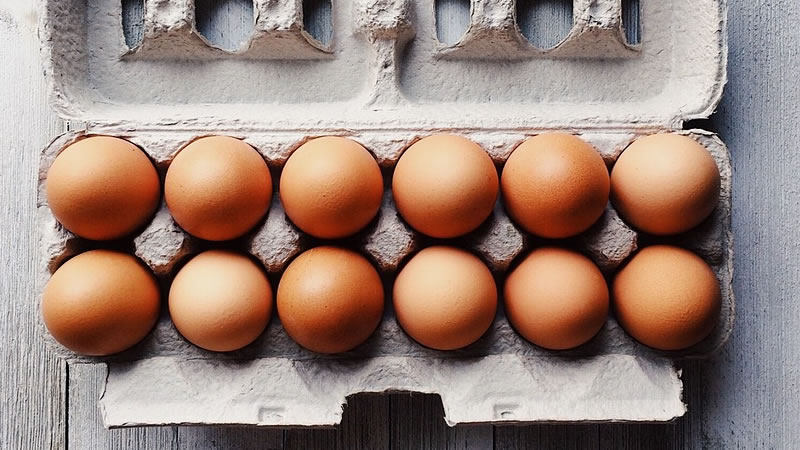
Water also plays a huge role in egg production. A chicken egg contains a surprisingly high amount of water.
- About 74% of an entire egg is water
- Egg whites contain roughly 88% water
- Egg yolks contain around 48% water
Without enough hydration, hens may lay fewer eggs or produce lower-quality eggs.
Unlike ducks, chickens do not enjoy bathing in water. Most chickens actually dislike getting wet because damp feathers make them cold and uncomfortable.
Instead, chickens clean themselves through dust bathing. They roll around in dry dirt or sand to remove excess oil, mites, and parasites from their feathers.
What Kind of Water Is Best for Chickens?
Not all water conditions are equally appealing to chickens.
Chickens prefer water that is clean, fresh, and cool. Warm stale water sitting under direct sunlight for hours usually becomes less attractive to them.
A healthy chicken’s body temperature normally stays around 105°F to 107°F (40.5°C to 41.6°C), but they often prefer drinking cooler water closer to about 55°F (12°C).
During summer, adding ice to waterers can help encourage drinking. Some chicken keepers place frozen water bottles or blocks of ice inside large water containers to keep temperatures lower throughout the day.
However, extremely cold water should be introduced carefully to baby chicks because sudden temperature shock may stress them.
Room-temperature water is usually safest for newly hatched chicks.
Tap water is generally fine for chickens as long as the water source is safe for human consumption. Well water can also work well if it is clean.
There has been ongoing debate about softened water because it contains added sodium. Since excessive salt intake is harmful to chickens, many keepers avoid heavily softened water systems.
A simple rule many chicken owners follow is this: if the water is safe and pleasant for you to drink, it is usually safe for chickens too.
How Much Water Do Chickens Need?
The amount of water chickens consume depends on several factors including weather, breed, body size, activity level, and feed type.
On average, a healthy adult chicken drinks about one pint or roughly half a liter of water per day under moderate temperatures.
That means a flock of six chickens may require at least three liters of water daily, sometimes more during hot weather.
Broiler chickens raised for meat often drink more water because of their rapid growth rates. Laying hens also increase water intake during heavy egg production periods.
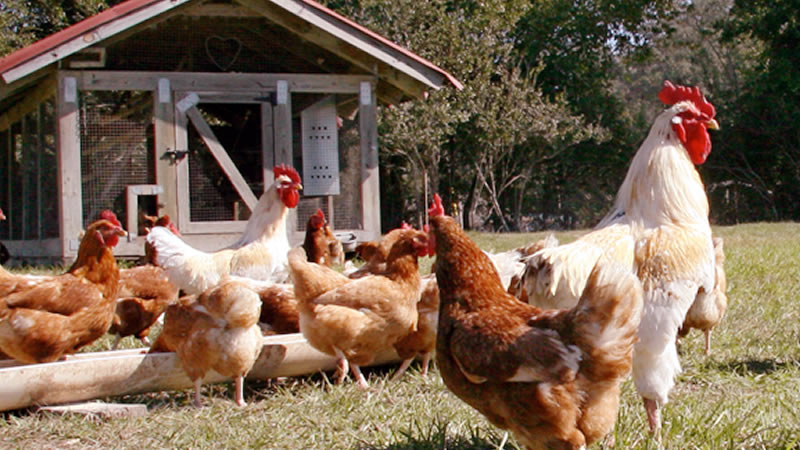
Free range chickens occasionally drink slightly less from waterers because they consume moisture-rich plants, insects, fruits, and grass while roaming outside.
Baby chicks are a little different. Newly hatched chicks can survive roughly 24 to 48 hours without food or water because they still absorb nutrients from the egg yolk before hatching.
But hatchery chicks shipped through the mail should receive water immediately after arrival because they become dehydrated very quickly during transport.
How to Teach Baby Chicks to Drink
Not every baby chick automatically understands where water is located.
Once chicks arrive, gently dip the tip of each chick’s beak into the waterer. Usually, they learn after one or two tries.
Be careful not to soak their bodies or feet while doing this because young chicks chill easily when wet.
After a few chicks begin drinking properly, the others usually copy the behavior on their own.
If weaker chicks still struggle, you may need to use a dropper carefully to help them drink during the first day.
Around 10 days old, a chick may consume roughly two ounces of water per day depending on temperature and diet.
Signs Your Chickens Are Dehydrated
Chickens that do not receive enough water can become seriously ill very quickly.
Under normal conditions, chickens may survive around two days without water, but severe heat can shorten that time dramatically.
Watch for these common dehydration symptoms:
- Pale combs and wattles
- Weakness or lethargy
- Heavy panting
- Reduced movement
- Weight loss
- Diarrhea or watery droppings
- Drop in egg production
- Poor appetite
- Wings held away from the body
- Seizures in severe cases
Dehydration should always be treated as an emergency, especially during summer.
7 Reasons Chickens May Stop Drinking Water
1. The Water Is Too Hot
Chickens dislike warm water sitting under direct sunlight for hours. During summer, water heats up surprisingly fast.
Move waterers into shaded areas and replace water regularly throughout the day.
2. The Water Tastes Strange
Some chickens are surprisingly picky about taste.
High chlorine levels or unusual additives may discourage drinking. If your flock suddenly reduces water intake after changing water sources, taste may be the problem.
3. The Water Is Dirty
Chickens avoid dirty water whenever possible.
Poop, algae, bedding, mud, feathers, and insects inside waterers make water less appealing and increase disease risk.
Water containers should be cleaned frequently, especially during warm weather.
4. Bullying Inside the Flock
Dominant chickens sometimes block weaker flock members from accessing feeders and waterers.
If one chicken appears weak, thin, or dehydrated while others seem normal, bullying could be happening.
Additional water stations often help reduce competition.
5. Illness
Sick chickens frequently lose interest in food and water.
Diseases such as Newcastle disease, infectious bronchitis, avian encephalomyelitis, and infectious bursal disease may cause reduced drinking behavior.
If symptoms continue, isolate the sick bird immediately.
6. Leaking Waterers
Leaky waterers create muddy and wet conditions around drinking areas.
Chickens dislike standing in wet areas, especially during cold weather. Wet flooring also increases bacteria and parasite problems.
7. Not Enough Waterers
If chickens crowd around water containers constantly, your flock probably needs additional waterers.
During summer, many chickens try to drink at the same time.
Multiple smaller water stations usually work better than one large crowded waterer.
How Many Waterers Do Chickens Need?
The number of waterers depends on flock size, waterer capacity, and coop layout.
Technically, a one-gallon waterer may supply enough daily water for six chickens under mild conditions. But relying on only one water source is risky.
If the waterer tips over, becomes dirty, or malfunctions, the entire flock loses access to water.
Most experienced chicken keepers prefer multiple waterers placed in different locations around the coop and run.
This also reduces competition between dominant and timid birds.
How Much Water Do Baby Chicks Need?
Baby chicks grow much faster than many beginners expect.
During their first week, around ten chicks may drink approximately one quart of water daily.
By the time chicks reach one to four weeks old, water consumption increases dramatically and may reach one gallon daily depending on temperature.
After four weeks, larger waterers become necessary because chicks drink more while becoming increasingly active.
Using at least two waterers is usually safer than depending on one.
Best Types of Chicken Waterers
There is no single perfect waterer for every flock. The best option depends on your setup, flock size, and management style.
1. Trough Waterers
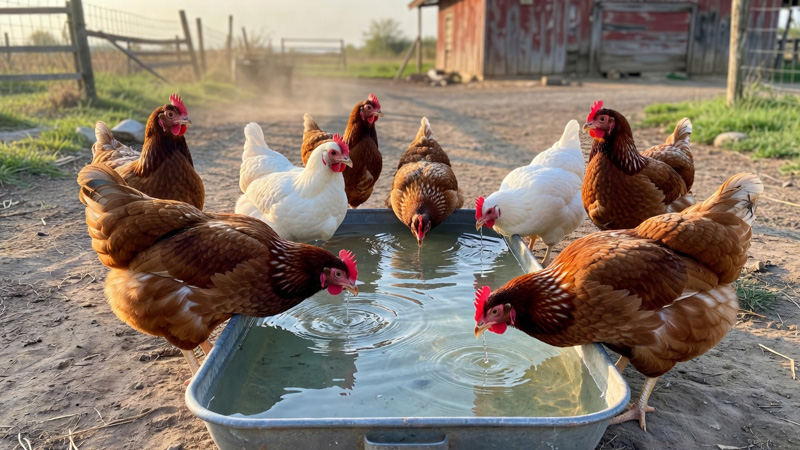
Trough waterers are simple open containers placed on the ground.
They work well for baby chicks and small breeds because chickens can access water easily.
Unfortunately, they also become dirty very quickly. Chickens often scratch bedding, poop, and dirt into open troughs.
2. Cup Waterers
Cup waterers use small cups attached to larger water containers.
These help reduce spills while keeping water more accessible.
For baby chicks, adding small pebbles into cups can help prevent accidental drowning.
3. Nipple Waterers
Nipple waterers are one of the cleanest and most efficient systems available.
Chickens peck metal nipples to release water directly into their beaks.
This design reduces contamination and water waste significantly.
However, nipples sometimes clog or freeze during winter if not maintained properly.
Where Should Chicken Waterers Be Placed?
For baby chicks inside brooders, waterers should stay close enough to the heat source so chicks do not become too cold while drinking.
At the same time, avoid placing water directly under heat lamps because the water may warm too quickly.
Adult chickens should always have access to water both inside the coop and outside in the run.
Place waterers in shaded areas where chickens naturally spend time. Avoid direct sunlight whenever possible because warm water encourages algae growth and bacterial buildup.
Waterers should also remain easy for you to refill and clean regularly.
How High Should Chicken Waterers Be?
If using hanging or gravity-fed waterers, position them around the same height as the chickens’ beaks.
This helps keep dirt and bedding out of the water while allowing comfortable drinking.
Nipple waterers are usually installed slightly higher because chickens peck upward while using them.
Correct height improves cleanliness and reduces wasted water.
Conclusion
Water plays a massive role in chicken health, growth, egg production, and survival. Clean water should never run out, especially during hot weather when dehydration happens very quickly.
Choosing the right waterer, placing it properly, and keeping it clean can prevent many common flock problems before they even begin.
The good news is that you do not need expensive equipment to keep chickens hydrated properly. Even simple homemade waterers can work very well if maintained correctly.
At the end of the day, healthy chickens always start with clean water, proper care, and consistency.