
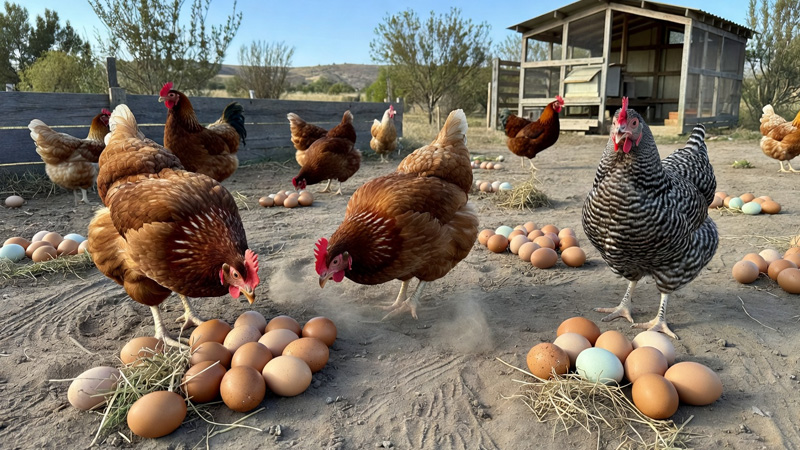
Every chicken keeper dreams of collecting a basket full of fresh eggs every day. Whether you raise chickens for your family or as part of a poultry business, increasing egg production is usually one of the main goals.
However, hens will only perform at their best when their nutritional, environmental, and health needs are met.
Many factors influence egg production, including breed, age, nutrition, lighting, stress levels, and overall flock management.
If your hens are producing fewer eggs than expected, the good news is that there are several natural ways to improve their productivity.
Here are 12 proven methods that can help encourage your chickens to lay more eggs consistently.
Table of Contents
- 1. Feed Your Hens a Balanced and Nutritious Diet
- 2. Ensure Constant Access to Clean Water
- 3. Increase Calcium Intake When Necessary
- 4. Maintain Comfortable Nesting Boxes
- 5. Give Chickens More Space
- 6. Improve Coop Ventilation
- 7. Reduce Sources of Stress
- 8. Manage Broody Hens Properly
- 9. Protect Hens from Parasites
- 10. Support Hens During Molting
- 11. Use Supplemental Lighting During Winter
- 12. Choose High-Producing Egg-Laying Breeds
- Free-Range vs Confined Chickens: Which Lay More Eggs?
- Conclusion
1. Feed Your Hens a Balanced and Nutritious Diet
Good egg production starts with proper nutrition.
Laying hens require a balanced diet rich in:
- Protein
- Calcium
- Vitamins
- Minerals
- Essential amino acids
Quality layer feed should always form the foundation of their diet. However, supplementing with healthy foods can provide additional nutrients that support egg production.
Examples include:
- Leafy greens
- Fresh vegetables
- Fruits
- Whole grains
- Mealworms
- Insects and worms from free-ranging
Probiotics and vitamin supplements may also help maintain a healthy digestive system and improve nutrient absorption.
2. Ensure Constant Access to Clean Water
Water is often overlooked, yet it is one of the most important factors in egg production.
A chicken egg contains approximately 75% water. Without adequate hydration, egg production can drop quickly.
Each hen should have access to clean, fresh water at all times.
During hot weather, chickens drink significantly more water to regulate body temperature.
Placing multiple waterers around the coop and run encourages regular drinking and reduces competition among flock members.
Most chickens prefer cool water rather than warm water. However, extremely cold or icy water should be avoided.
A simple rule is this: if the water is safe and pleasant for you to drink, it is generally suitable for your chickens as well.
3. Increase Calcium Intake When Necessary
Producing eggs requires a tremendous amount of calcium.
A single eggshell contains roughly 2 grams of calcium, and laying hens must replace this supply continuously.
Signs of calcium deficiency may include:
- Thin eggshells
- Soft-shelled eggs
- Misshapen eggs
- Reduced egg production
Additional calcium sources may include:
- Crushed oyster shells
- Crushed eggshells
- Commercial calcium supplements
Providing calcium separately allows hens to consume extra calcium only when needed.
4. Maintain Comfortable Nesting Boxes
Hens prefer laying eggs in secure, comfortable, and private locations.
Uncomfortable nesting boxes may discourage laying or encourage hens to lay eggs elsewhere.
A general guideline is one nesting box for every four to five hens.
Nesting boxes should be:
- Clean
- Dry
- Quiet
- Slightly elevated
- Protected from predators
Collecting eggs at least twice daily helps prevent overcrowding and reduces the risk of broken eggs.
For young pullets, placing fake eggs or golf balls inside nesting boxes can help teach proper laying habits.
5. Give Chickens More Space
Overcrowding creates stress, aggression, and competition within the flock.
Stressed hens rarely perform at their full laying potential.
As a general recommendation:
- Allow 2 to 3 square feet per chicken inside the coop
- Provide 8 to 10 square feet per chicken in the outdoor run
More space often leads to calmer birds, fewer conflicts, and better overall productivity.
This becomes especially important during winter when chickens spend more time indoors.
6. Improve Coop Ventilation
Good airflow is essential for healthy chickens.
Unlike humans, chickens cannot sweat. Instead, they regulate body temperature through breathing and airflow around their bodies.
Poor ventilation can cause:
- Heat stress
- Respiratory issues
- High humidity
- Ammonia buildup
- Reduced egg production
Proper ventilation helps maintain a comfortable environment throughout the year.
During summer, shade and airflow become particularly important because many hens stop laying when temperatures rise too high.
7. Reduce Sources of Stress
Stress is one of the biggest enemies of egg production.
Even healthy hens may stop laying temporarily when they experience significant stress.
Common stress factors include:
- Predators
- Bullying within the flock
- Overcrowding
- Extreme weather
- Sudden feed changes
- Frequent relocation
- Illness
Monitoring your flock regularly helps identify problems before they significantly affect production.
Happy chickens are usually productive chickens.
8. Manage Broody Hens Properly
Broody hens stop focusing on laying eggs and become determined to hatch chicks instead.
Some hens will remain on a nest for weeks, even when no fertile eggs are present.
Breeds known for broodiness include:
- Buff Orpington
- Brahma
- Cochin
- Sussex
- Chantecler
If your goal is maximum egg production rather than hatching chicks, you may need to interrupt broodiness safely.
Managing broody behavior allows hens to return to laying sooner.
9. Protect Hens from Parasites
Parasites weaken chickens and reduce productivity.
Both internal and external parasites can interfere with nutrient absorption and overall health.
Common internal parasites include:
- Roundworms
- Tapeworms
- Cecal worms
- Coccidia
External parasites include:
- Mites
- Lice
- Fleas
- Various biting insects
Regular coop cleaning, dry bedding, proper nutrition, and routine health checks help minimize parasite problems.
10. Support Hens During Molting
Molting is a natural process where chickens shed old feathers and grow new ones.
Most hens experience their first major molt around 18 months of age and continue molting annually thereafter.
During molting, hens redirect energy toward feather growth rather than egg production.
As a result, laying often slows dramatically or stops completely.
Since feathers consist mostly of protein, increasing dietary protein during this period can help support recovery.
Providing a stress-free environment also helps hens return to laying more quickly once molting ends.
11. Use Supplemental Lighting During Winter
Daylight plays a major role in egg production.
Most hens require approximately 14 to 16 hours of light daily to maintain peak laying performance.
During winter, shorter days often cause production to decline naturally.
Adding low-intensity supplemental lighting inside the coop can help extend daylight hours and support consistent laying.
Warm-colored LED bulbs are often preferred because they provide stable lighting without generating excessive heat.
Avoid overly bright lighting, which may create stress instead of improving productivity.
12. Choose High-Producing Egg-Laying Breeds
Genetics ultimately play a major role in how many eggs a hen can produce.
Some breeds naturally lay far more eggs than others.
Among the most productive egg-laying breeds are:
- White Leghorn
- Rhode Island Red
- Australorp
- Plymouth Rock
- Golden Comet
- Sussex
- Ameraucana
Many of these breeds regularly produce between 250 and 300 eggs annually under proper conditions.
Selecting the right breed from the beginning can make a significant difference in overall flock productivity.
Free-Range vs Confined Chickens: Which Lay More Eggs?
This question has sparked debate among poultry keepers for many years.
Both systems have advantages and disadvantages.
Free-range hens often benefit from:
- More exercise
- Natural sunlight
- Additional nutrients from foraging
- Improved overall well-being
Confined hens, on the other hand, typically have easier access to:
- Feed
- Water
- Nesting boxes
- Artificial lighting
Neither system automatically guarantees better egg production.
In reality, productivity depends more on nutrition, management, breed selection, health, and environmental conditions than whether hens are free-range or confined.
Conclusion
Encouraging chickens to lay more eggs involves much more than simply feeding them and collecting eggs each day.
Successful egg production requires a combination of proper nutrition, clean water, comfortable housing, good health management, and stress reduction.
While genetics determine a hen’s overall laying potential, providing the right environment allows her to reach that potential more consistently.
Remember that every hen eventually reaches the end of her productive years. When that time comes, no amount of management can restore peak egg production.
By following these natural methods and maintaining a healthy flock, you can maximize egg production and enjoy a steady supply of fresh eggs for years to come.

