If you are searching for a friendly chicken that lays lots of eggs consistently, ISA Brown chickens are probably one of the best options you will come across.
These hybrid chickens became extremely popular because of their impressive egg production, calm personality, and easy-going nature. Commercial farms love them for their productivity, while backyard chicken keepers often choose them because they are gentle and beginner-friendly.
ISA Browns are not perfect though. Their heavy egg production can sometimes affect their long-term health and lifespan. So before raising them, it helps to understand both their strengths and weaknesses.
This guide covers everything beginners should know about ISA Brown chickens including their origin, personality, egg production, feeding requirements, common health concerns, and overall care.
Table of Contents
- Where Did ISA Brown Chickens Come From?
- What Do ISA Brown Chickens Look Like?
- How Big Do ISA Brown Chickens Get?
- ISA Brown Chicken Temperament and Behavior
- Are ISA Brown Chickens Cold Hardy?
- What Should You Feed ISA Brown Chickens?
- Are ISA Brown Chickens Good Egg Layers?
- Are ISA Brown Chickens Good for Meat?
- Common Health Problems in ISA Brown Chickens
- How to Care for ISA Brown Chickens
- ISA Brown Chickens Pros and Cons
- Conclusion
Where Did ISA Brown Chickens Come From?
ISA Brown chickens were originally developed in France in 1978 by a company called Institut de Sélection Animale.
Despite being commonly called a chicken breed, ISA Brown is technically a hybrid line and not a true pure breed chicken.
The name itself is actually a commercial brand.
These chickens were specifically created for one main purpose: producing large amounts of eggs efficiently.
Over time, the ISA breeding program became associated with Hubbard ISA after company mergers involving international poultry genetics businesses.
The exact combination of breeds used to create ISA Browns was never fully released publicly. However, many poultry experts believe breeds like:
- White Leghorn
- Rhode Island Red
- Rhode Island White
were likely involved in the development process.
Because ISA Browns are hybrids rather than standardized pure breeds, organizations like the American Poultry Association do not officially recognize them as a standard breed.
Still, that has not stopped them from becoming one of the most successful commercial egg-laying chickens in the world.
What Do ISA Brown Chickens Look Like?
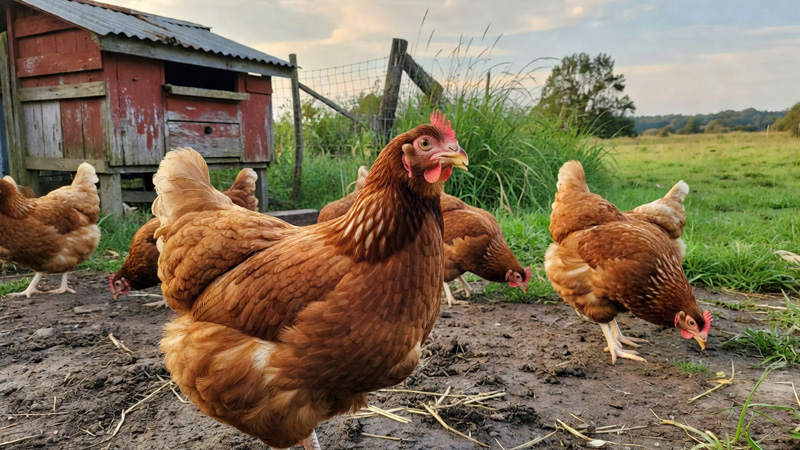
ISA Brown chickens have a soft reddish-brown feather color that often reminds people of Rhode Island Reds.
However, ISA Browns usually appear slightly lighter in shade with more golden or chestnut tones mixed into the feathers.
Most hens have:
- Brown or reddish-brown plumage
- White tail feathers
- Yellow legs
- Single red combs
- Red wattles and earlobes
Their bodies are medium-sized with a fairly rectangular shape.
Roosters look different from hens. Male ISA Browns often have much lighter feathers with white plumage mixed with brown patches or flecks.
One interesting feature of ISA Browns is that they are sex-link chickens. This means male and female chicks can usually be identified immediately after hatching based on feather color.
Female chicks are typically tan or brown, while male chicks appear lighter or mostly white.
How Big Do ISA Brown Chickens Get?
ISA Browns are considered standard-sized chickens, although they are usually lighter than many traditional dual-purpose breeds.
Adult hens normally weigh around 5 pounds (2.2 kg), while roosters average roughly 6 pounds (2.7 kg).
Compared to larger meat breeds, ISA Browns are fairly lightweight birds.
There is also an ISA White variety, which tends to be even smaller and lighter than the brown version.
Currently, there is no recognized bantam version of the ISA Brown.
ISA Brown Chicken Temperament and Behavior
One reason ISA Browns became so popular in backyard flocks is their personality.
These chickens are usually calm, friendly, affectionate, and easy to handle. Many owners describe them as extremely people-oriented.
Some even enjoy being picked up and sitting on laps quietly.
Because of their gentle temperament, ISA Browns are often recommended for:
- Families with children
- First-time chicken keepers
- Urban backyard flocks
- Small homesteads
They are not highly flighty birds either, which makes them easier to manage compared to more nervous breeds.
ISA Browns also tend to stay relatively quiet most of the time. Aside from occasional egg-laying announcements, they usually do not create excessive noise.
That makes them suitable for neighborhoods where loud chickens could become a problem.
Despite their sweet nature, ISA Brown hens can sometimes become slightly dominant in flock hierarchy. They are not aggressive bully chickens, but many prefer staying near the top of the pecking order.
When introducing new birds, it is smart to supervise interactions carefully during the adjustment period.
Are ISA Brown Chickens Cold Hardy?
ISA Browns handle moderate cold reasonably well, although they are not considered one of the most cold-hardy chicken breeds available.
Their smaller combs reduce frostbite risk compared to breeds with very large combs.
Since they also have clean, featherless legs, moisture and mud are usually less problematic during winter.
Hot weather is generally manageable too as long as they have:
- Shade
- Good airflow
- Fresh cool water
- Proper ventilation
During summer, shaded outdoor areas and dust bathing spots help them stay comfortable.
What Should You Feed ISA Brown Chickens?
Feeding ISA Browns is fairly straightforward and very similar to feeding other laying chickens.
Feeding ISA Brown Chicks
From hatch until about 6 weeks old, chicks should receive starter feed containing roughly 20% protein.
This higher protein level supports healthy growth and feather development.
Grower Feed Stage
Between 6 and 18 weeks old, young pullets should transition gradually to grower feed with around 16% to 18% protein.
Layer Feed Stage
Once hens begin laying eggs, usually around 18 weeks old, they should switch to layer feed.
Layer feed contains additional calcium needed for eggshell formation.
Oyster shells can also be provided separately for laying hens needing extra calcium.
However, pullets that have not started laying should not receive excessive calcium.
Treats and Supplemental Foods
ISA Browns enjoy a wide variety of healthy treats and forage items including:
- Mealworms
- Watermelon
- Blueberries
- Bananas
- Grapes
- Carrots
- Lettuce
- Squash
- Beans
Free ranging also helps keep them mentally stimulated and active.
Treats and kitchen scraps should remain limited though. Ideally, treats should not exceed about 10% of their overall diet.
Avoid feeding harmful foods like:
- Chocolate
- Avocado pits and peels
- Raw beans
- Moldy food
- Highly salty foods
Are ISA Brown Chickens Good Egg Layers?
This is where ISA Browns truly stand out.
ISA Brown hens are famous for their incredible egg-laying ability. Under good management, a healthy hen may produce around 300 eggs per year.
That usually equals about five to six eggs every week.
Many hens begin laying surprisingly early, often around 18 weeks old.
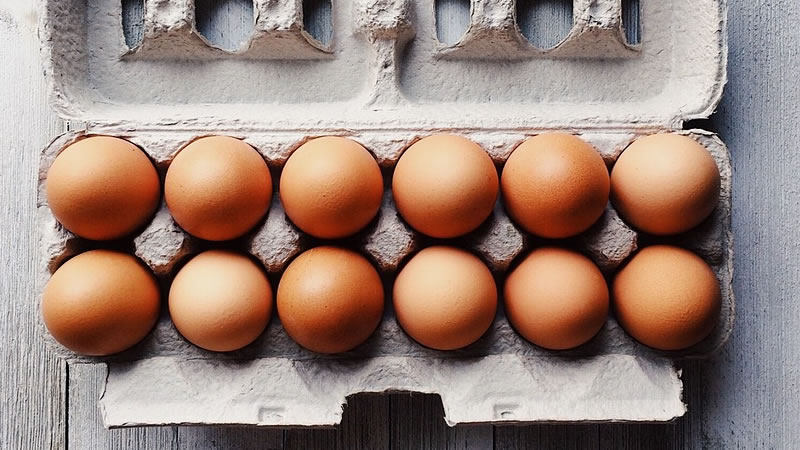
Their eggs are medium to large in size with light brown to dark brown shells.
Commercial egg farms commonly use ISA Browns because they convert feed into egg production very efficiently.
Some well-managed hens may produce close to 500 eggs during their productive lifetime.
Honestly, there is a good chance many grocery store brown eggs came from ISA Brown-type hybrid hens.
Are ISA Brown Chickens Good for Meat?
ISA Browns were never designed for meat production.
Unlike dual-purpose breeds, they focus most of their energy on egg laying instead of developing large muscle mass.
Their smaller body size makes them less practical for commercial meat production.
Older hens can still be processed for meat after retirement from laying, but the meat may become tougher with age.
For people specifically wanting meat birds, broiler breeds or dual-purpose chickens are usually better choices.
Common Health Problems in ISA Brown Chickens
Overall, ISA Browns are fairly hardy birds when managed properly.
However, heavy egg production places significant stress on their bodies over time.
One issue sometimes seen in prolific laying hens is vent prolapse.
This happens when internal tissue protrudes outward through the vent during or after laying.
Mild cases can occasionally be treated at home carefully using lubrication and gentle repositioning, but severe cases may require veterinary attention.
Because ISA Browns are bred heavily for production, their egg-laying rate may also shorten their lifespan compared to traditional heritage breeds.
Many hens slow down noticeably after around two years of heavy laying.
Another important point is breeding.
Breeding two ISA Browns together is generally not recommended because the offspring may inherit weakness, poor health, or inconsistent traits.
Since they are hybrid chickens, their genetics do not reproduce consistently the way true breeds do.
How to Care for ISA Brown Chickens
With good care, ISA Browns can remain healthy, productive, and friendly for several years.
Although many commercial hens only stay productive for about two years, backyard ISA Browns often live longer when not pushed for maximum egg production.
Some may live four years or more under proper care.
Coop Space Requirements
ISA Browns need enough room to stay comfortable and avoid stress.
A general guideline includes:
- At least 2 square feet per chicken inside the coop
- At least 8 square feet per chicken in the outside run
Since they can become slightly territorial, more space is always better.
Nesting Boxes
Because ISA Browns lay so frequently, adequate nesting space is important.
Clean bedding should be replaced regularly to keep eggs sanitary and reduce parasite problems.
Dummy eggs or golf balls inside nesting boxes can help train young pullets where to lay.
Ventilation and Cleanliness
Proper coop ventilation matters year-round.
Poor airflow increases moisture, ammonia buildup, and respiratory problems.
Regular cleaning also helps prevent mites, lice, and bacterial infections.
ISA Brown Chickens Pros and Cons
Advantages of ISA Brown Chickens
- Excellent egg production
- Friendly and calm temperament
- Great for beginners
- Good family pets
- Relatively quiet birds
- Can adapt to confinement or free ranging
- Easy to handle
- Early egg production
- Sex-link chicks are easy to identify
- Tolerate different climates reasonably well
Disadvantages of ISA Brown Chickens
- Not ideal for meat production
- Shorter lifespan compared to heritage breeds
- Prone to reproductive strain from heavy laying
- Can become somewhat dominant in flock hierarchy
- Hybrid genetics do not breed true
- Limited color varieties
Conclusion
ISA Brown chickens earned their reputation for a reason. They are dependable egg layers, beginner-friendly, affectionate, and relatively easy to manage.
For families wanting fresh eggs regularly without dealing with difficult chicken behavior, ISA Browns are often an excellent choice.
Yes, their intense egg production can sometimes affect lifespan and long-term health, but many owners still consider the tradeoff worthwhile because of how productive and friendly these chickens are.
With proper feeding, enough space, clean housing, and regular care, ISA Brown chickens can become one of the most rewarding additions to a backyard flock.