If you’ve ever wondered why some chickens lay white eggs while others produce brown, blue, green, or cream-colored eggs, the answer is mainly genetics. Chicken egg color is one of the most interesting aspects of poultry keeping and a major factor for backyard chicken keepers when selecting breeds.
This guide explains chicken egg colors by breed, how egg color is formed, and which breeds produce the most popular shell colors. You’ll also learn whether egg color affects taste, nutrition, and egg quality, and how to plan a flock for a colorful egg basket.
Table of Contents
- Why Chicken Egg Colors Vary
- White Egg Laying Chicken Breeds
- Brown Egg Laying Chicken Breeds
- Blue Egg Laying Chicken Breeds
- Green and Olive Egg Laying Chicken Breeds
- Cream, Tinted, and Pinkish Egg Breeds
- Speckled Egg Chicken Breeds
- Chicken Egg Colors by Breed Chart
- What Affects Egg Color Shade?
- Do Egg Colors Affect Taste or Nutrition?
- Best Chicken Breeds for a Colorful Egg Basket
- Choosing the Right Breed
- Conclusion
Why Chicken Egg Colors Vary
Egg shell color is determined by genetics. Each breed carries genes that control pigment deposition during egg formation inside the hen. The two primary pigments are:
- Protoporphyrin (brown pigment)
- Oocyanin (blue pigment)
White eggs occur when little or no pigment is deposited. When pigments combine or layer, they produce shades like green, olive, cream, or tinted shells.
While breed is the primary factor, minor variations in shade can occur due to age, diet, stress, and environmental conditions.
White Egg Laying Chicken Breeds
White eggs are commonly produced by high-efficiency laying breeds, especially those used in commercial production.
Common white egg breeds include:
- Leghorn
- Ancona
- Minorca
- Andalusian
- Hamburg
White-egg layers are typically excellent producers and are popular for backyard flocks focused on high egg output.
Brown Egg Laying Chicken Breeds
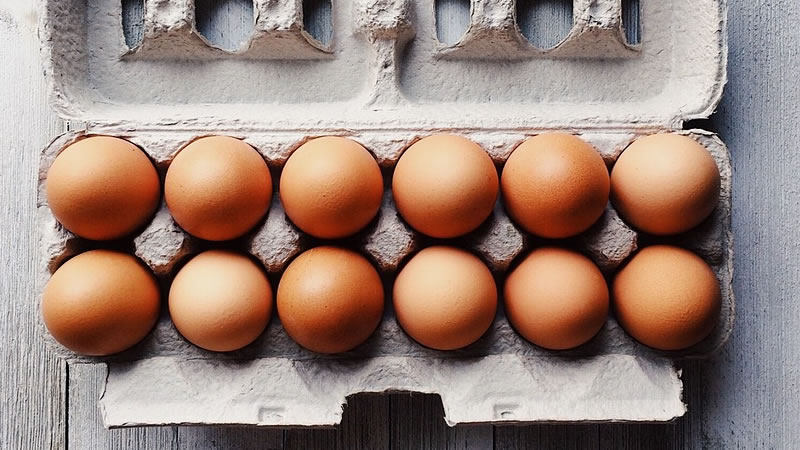
Brown eggs are the most common backyard egg color. The shade can range from light tan to dark chocolate brown.
Popular brown egg breeds include:
- Rhode Island Red
- Plymouth Rock
- Sussex
- Orpington
- Australorp
Brown eggs are often associated with traditional farm flocks, but they are nutritionally similar to eggs of other colors.
Blue Egg Laying Chicken Breeds
Blue eggs are highly prized for their unique appearance. The blue color is embedded throughout the shell due to the oocyanin pigment.
Well-known blue egg layers include:
- Ameraucana
- Araucana
- Easter Egger
Blue eggs are especially popular among backyard chicken keepers for their visual appeal.
Green and Olive Egg Laying Chicken Breeds
Green and olive eggs are typically produced when blue egg genetics combine with brown pigment overlays.
Common green/olive egg layers include:
- Olive Egger
- Easter Egger
- Marans crosses (select lines)
These eggs add strong visual variety to a mixed-color egg basket.
Cream, Tinted, and Pinkish Egg Breeds
Some breeds lay softer pastel-colored eggs such as cream, ivory, or light pink tones.
Examples include:
- Silkie
- Polish
- Cochin
- Bantam varieties
These eggs are often smaller and more decorative, making them popular in ornamental flocks.
Speckled Egg Chicken Breeds
Speckled eggs can appear in several breeds and mixed lines. The pattern varies in intensity and distribution.
Breeds known for speckled eggs include:
- Welsummer
- Marans (some lines)
- Mixed-breed hens
Speckling adds a rustic and decorative appearance to egg baskets.
Chicken Egg Colors by Breed Chart
| Egg Color | Common Breeds |
|---|---|
| White | Leghorn, Minorca, Ancona, Andalusian, Hamburg |
| Brown | Rhode Island Red, Plymouth Rock, Sussex, Orpington, Australorp |
| Blue | Ameraucana, Araucana, Easter Egger |
| Green | Easter Egger, Olive Egger |
| Olive | Olive Egger, Marans crosses |
| Cream / Tinted | Silkie, Polish, Cochin, Bantams |
| Speckled | Welsummer, Marans (some lines), mixed breeds |
What Affects Egg Color Shade?
Even within the same breed, egg shade can vary slightly due to:
- Age of the hen
- Diet and nutrition
- Stress levels
- Seasonal changes
However, the breed remains the dominant factor in determining egg color.
Do Egg Colors Affect Taste or Nutrition?
No. Egg shell color does not affect taste or nutritional value. A white egg and a brown egg are essentially identical in quality when produced under similar conditions.
Factors that do influence taste include freshness, diet, and storage conditions—not shell color.
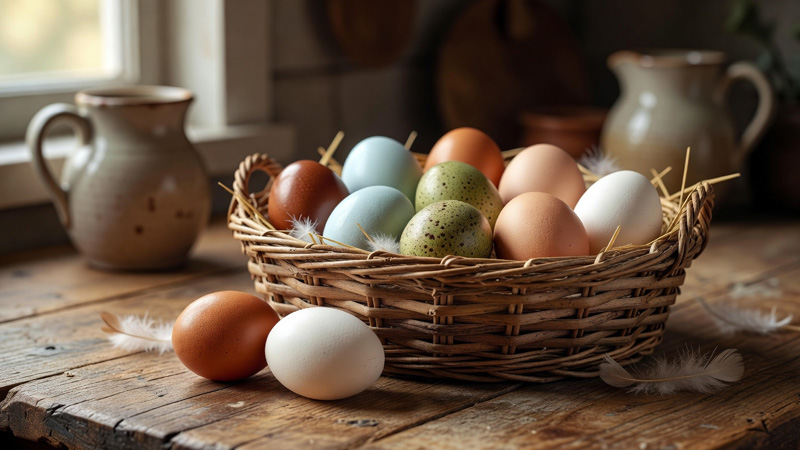
Best Chicken Breeds for a Colorful Egg Basket
If you want a variety of egg colors, the best approach is to mix breeds:
- Leghorn (white eggs)
- Rhode Island Red (brown eggs)
- Ameraucana or Easter Egger (blue/green eggs)
- Olive Egger (olive eggs)
Easter Eggers are especially popular for beginners because they produce unpredictable but colorful eggs.
Choosing the Right Breed
Egg color is only one part of selecting chicken breeds. You should also consider:
- Temperament
- Climate tolerance
- Egg production rate
- Space requirements
A balanced flock ensures both productivity and visual variety.
Conclusion
Chicken egg colors by breed are determined primarily by genetics and make backyard chicken keeping more enjoyable and visually interesting. Whether you prefer white, brown, blue, green, or cream eggs, there is a breed that fits your goals.
By choosing a mix of breeds, you can enjoy a diverse and colorful egg basket while maintaining steady egg production throughout the year.