
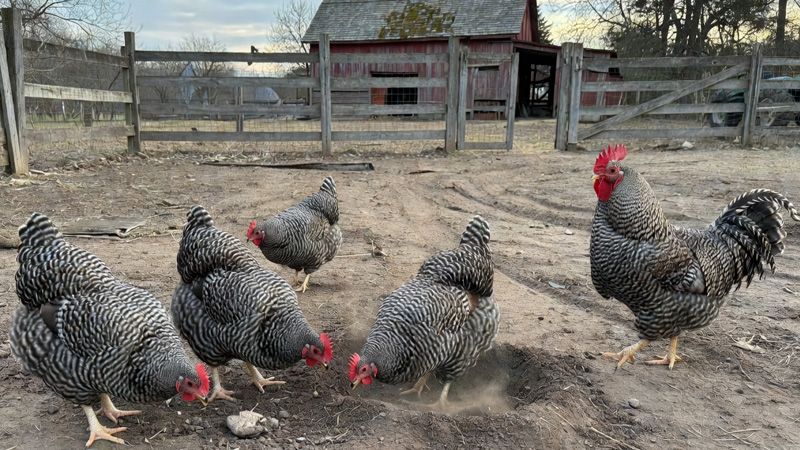
If you are searching for a chicken breed that can provide both eggs and meat while also being friendly enough to become a family pet, Plymouth Rock chickens deserve a place at the top of your list.
For more than a century, these birds have remained one of America’s most respected and dependable chicken breeds. Their excellent temperament, attractive appearance, and dual-purpose abilities have made them favorites among backyard chicken keepers and small farmers alike.
But are Plymouth Rock chickens the right choice for your flock?
This complete guide will help you understand their history, appearance, personality, egg production, care requirements, and everything else you should know before raising them.
Table of Contents
- Where Did Plymouth Rock Chickens Originate?
- What Do Plymouth Rock Chickens Look Like?
- How Big Do Plymouth Rock Chickens Get?
- Plymouth Rock Chicken Temperament
- Are Plymouth Rock Chickens Noisy?
- Do Plymouth Rock Chickens Go Broody?
- Are Plymouth Rock Chickens Cold Hardy?
- What Should You Feed Plymouth Rock Chickens?
- Are Plymouth Rock Chickens Good Egg Layers?
- Are Plymouth Rock Chickens Good for Meat Production?
- Common Health Issues in Plymouth Rock Chickens
- How to Care for Plymouth Rock Chickens
- Plymouth Rock Chickens Pros and Cons
- Conclusion
Where Did Plymouth Rock Chickens Originate?
Plymouth Rock chickens originated in Plymouth, Massachusetts, one of the most historic locations in the United States.
The first version of the breed was developed in the 1840s by Dr. John C. Bennett. In 1847, he introduced a barred-feathered chicken called the Plymouth Rock.
Unfortunately, the original birds failed to maintain consistent characteristics. Breeders quickly lost interest, and the first Plymouth Rock strain eventually disappeared.
Nearly twenty years later, poultry breeders created a more uniform and improved version of the breed. This new strain was exhibited in Worcester, Massachusetts, in 1869 and became the foundation of today’s Plymouth Rock chickens.
Several breeds are believed to have contributed to the development of the Plymouth Rock, including:
- Black Java
- Brahma
- Buff Cochin
- Dorking
- Dominique
- Spanish
- Minorca
- White Cochin
The American Poultry Association officially recognized the breed in 1874.
Although the Barred Plymouth Rock was the original variety, several other color varieties were eventually developed and recognized.
Today, accepted color varieties include:
- Barred
- Black
- Blue
- Buff
- Columbian
- Partridge
- Silver Penciled
- White
While commercial poultry production caused a decline in popularity during the twentieth century, Plymouth Rocks have experienced a strong comeback among backyard chicken enthusiasts and small farms.
What Do Plymouth Rock Chickens Look Like?
Plymouth Rock chickens are large, sturdy birds with broad bodies covered by thick, fluffy feathers.
Their feathering often makes them appear larger than they actually are.
Common physical characteristics include:
- Single bright red comb with five points
- Dark reddish-brown eyes
- Yellow beak
- Yellow skin
- Yellow featherless legs
- Broad chest and body
- Medium-sized wings
- Four toes on each foot
Their upright posture gives them a confident appearance without looking aggressive.
All Plymouth Rock color varieties share similar body structure, differing mainly in feather coloration.
Plymouth Rock vs Dominique
Many beginners confuse Plymouth Rock chickens with Dominique chickens because both breeds have barred feather patterns.
The easiest way to tell them apart is by examining the comb.
Dominique chickens have rose combs, while Plymouth Rocks have single combs.
The barring pattern also tends to look sharper and more defined on Plymouth Rocks.
How Big Do Plymouth Rock Chickens Get?
Plymouth Rocks are considered a large dual-purpose breed.
Standard-sized birds typically reach:
- Roosters: 7.5 pounds (3.4 kg) or more
- Hens: 6.5 pounds (2.95 kg) or more
Bantam versions are much smaller:
- Bantam roosters: approximately 3 pounds
- Bantam hens: approximately 2.5 pounds
In the United States, standard-sized Plymouth Rocks are far more popular, while bantams have gained stronger popularity in parts of Europe.
Regardless of size, both versions maintain the same personality and general characteristics.
Plymouth Rock Chicken Temperament
One of the biggest reasons people love Plymouth Rock chickens is their personality.
These birds are friendly, calm, affectionate, and surprisingly people-oriented.
Many owners describe them as chickens that actively seek human interaction.
It is not unusual for Plymouth Rocks to:
- Follow their owners around the yard
- Enjoy being held
- Sit on laps
- Interact gently with children
- Accept treats from visitors
They are also intelligent birds that quickly learn routines and recognize familiar people.
While they may act cautious around strangers initially, they usually warm up once trust is established.
Plymouth Rocks generally get along well with:
- Other chicken breeds
- Cats
- Dogs
- Children
Although they are not aggressive, they can sometimes display a slightly bossy attitude within the flock. However, serious bullying behavior is uncommon.
Most Plymouth Rocks occupy a middle position within the pecking order and can defend themselves when necessary.
Are Plymouth Rock Chickens Noisy?
Plymouth Rocks are generally considered quiet chickens.
Hens occasionally become vocal after laying eggs, but excessive noise is uncommon.
Their calm nature makes them suitable for suburban and urban backyard flocks where noise complaints could become an issue.
Compared to many other breeds, Plymouth Rocks are relatively peaceful neighbors.
Do Plymouth Rock Chickens Go Broody?
Broodiness varies significantly among different Plymouth Rock bloodlines.
Some hens become highly broody and eagerly sit on eggs, while others may never show broodiness at all.
When they do decide to hatch eggs, Plymouth Rock hens usually make excellent mothers.
They are protective, attentive, and often care for chicks exceptionally well.
Many owners report seeing broody hens guide and protect chicks that are not even their own.
Are Plymouth Rock Chickens Cold Hardy?
Plymouth Rocks handle cold weather very well.
Their dense feathering provides excellent insulation during winter months.
Hens generally tolerate cold temperatures better than roosters because roosters have larger combs that may be more vulnerable to frostbite.
Winter egg production often remains fairly consistent compared to many other breeds.
Hot weather is more challenging.
Their thick plumage makes them susceptible to overheating during extremely warm summers.
Providing shade, ventilation, and fresh water becomes especially important during hot weather.
What Should You Feed Plymouth Rock Chickens?
Plymouth Rocks are not picky eaters and generally thrive on the same feeding program used for most backyard chickens.
Feeding Chicks
Young chicks should receive a quality chick starter feed with adequate protein for healthy growth.
Growing Birds
As they mature, growers can transition to grower feed before eventually switching to layer feed once hens begin laying.
Supplemental Foods
Plymouth Rocks enjoy a variety of healthy treats and forage items, including:
- Apples
- Berries
- Leafy greens
- Vegetables
- Grains
- Mealworms
- Small amounts of scratch grain
Because they are excellent foragers, allowing access to pasture or free-range areas can significantly improve their diet and activity levels.
Are Plymouth Rock Chickens Good Egg Layers?
Plymouth Rock hens are considered reliable egg producers.
Although they are not among the highest-producing commercial layers, they consistently provide a good number of eggs throughout the year.
Most hens lay:
- 200 to 250 eggs annually
- Approximately 4 to 5 eggs weekly
Egg production usually begins between four and six months of age.
Their eggs are:
- Large
- Brown-shelled
- Consistent in quality
The combination of dependable laying and meat production is one reason Plymouth Rocks remain one of the most popular dual-purpose breeds available today.
Are Plymouth Rock Chickens Good for Meat Production?
Yes, Plymouth Rocks are excellent dual-purpose chickens.
They grow large enough to provide a respectable amount of meat while still maintaining good egg production.
Most birds reach processing weight between four and five months of age.
Their meat is known for being:
- Tender
- Juicy
- Flavorful
White Plymouth Rocks have become especially important in commercial poultry production.
Many modern broiler hybrids are created by crossing White Plymouth Rocks with Cornish chickens.
This combination produces the fast-growing meat chickens commonly found in grocery stores today.
Common Health Issues in Plymouth Rock Chickens
Plymouth Rocks are generally a healthy and hardy breed.
They are not known for any major genetic disorders or breed-specific diseases.
However, like many large feathered breeds, they can experience:
- Heat stress during summer
- Frostbite on large combs during severe cold
- Occasional dirty feathers around the vent area
Good coop hygiene, proper ventilation, and regular health checks help prevent most problems.
How to Care for Plymouth Rock Chickens
Taking care of Plymouth Rocks is relatively simple, making them an excellent choice for beginners.
Summer Management
Extra care is usually needed during hot weather.
Provide:
- Shade
- Fresh water
- Proper airflow
- Dust bathing areas
Trees, shrubs, and covered runs can help reduce heat stress significantly.
Managing Flock Dynamics
Although Plymouth Rocks are generally peaceful, aggressive breeds may occasionally challenge them.
If serious bullying occurs, separating incompatible birds may be necessary.
Monitoring Feather Condition
During seasonal dietary changes, some birds may develop loose droppings that stick to feathers around the vent area.
Regular inspection and cleaning help prevent hygiene issues.
Lifespan
Most Plymouth Rock chickens live between 5 and 8 years when provided with proper care, nutrition, and predator protection.
Plymouth Rock Chickens Pros and Cons
Advantages of Raising Plymouth Rock Chickens
- Friendly and affectionate personality
- Excellent family chickens
- Good with children
- Intelligent and easy to manage
- Cold hardy
- Reliable egg production
- Good meat quality
- Quiet temperament
- Adaptable to free-range and confinement
- Strong foraging ability
- Excellent mothers
- Few health concerns
- Many color varieties available
- Bantam and standard sizes available
- Great for beginners
Disadvantages of Raising Plymouth Rock Chickens
- Broodiness varies significantly
- Can occasionally be bossy
- Require extra attention during hot weather
Conclusion
Plymouth Rock chickens have earned their reputation as one of America’s most dependable and versatile chicken breeds.
They combine friendly personalities, reliable egg production, good meat quality, and impressive adaptability into a single package.
Whether you are raising chickens for eggs, meat, companionship, or all three, Plymouth Rocks can meet those needs remarkably well.
Their calm nature also makes them an excellent choice for families, first-time chicken keepers, and anyone looking for a low-maintenance breed with a proven track record.
For many poultry enthusiasts, it is easy to understand why Plymouth Rock chickens have remained favorites for generations.

