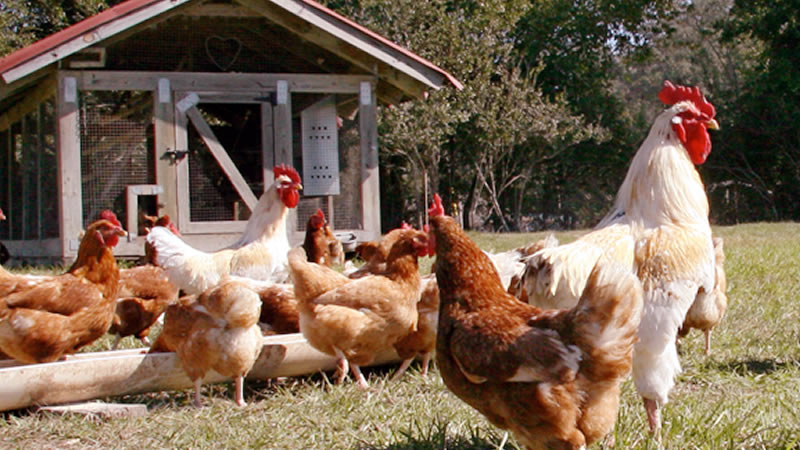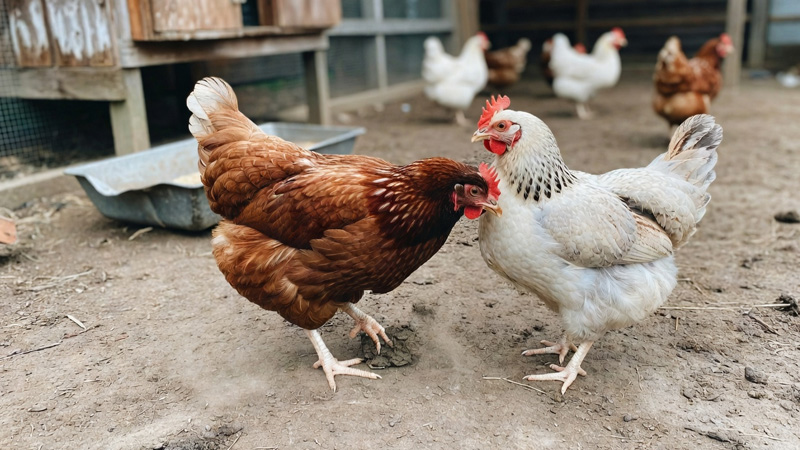
Chicken pecking is a normal part of flock behavior. However, there is a big difference between establishing a pecking order and actual bullying.
Every flock has a social hierarchy that helps maintain order. Minor pecking, chasing, and occasional disagreements are natural. But when aggressive behavior becomes constant and causes injuries, stress, or death, intervention becomes necessary.
Understanding why chickens peck each other is one of the most important skills every poultry keeper should learn.
In this guide, you will discover how the pecking order works, what causes chicken bullying, the warning signs to watch for, and the best ways to stop and prevent serious pecking problems.
Table of Contents
What Is the Pecking Order in Chickens?
The pecking order is the social ranking system that naturally develops within a flock.
Every chicken has a position, from the dominant bird at the top to the least dominant bird at the bottom.
This hierarchy helps determine access to important resources such as:
- Food
- Water
- Nesting boxes
- Roosting spots
- Preferred areas of the coop
In most flocks, the strongest and most confident rooster becomes the leader. If there is no rooster, a dominant hen often takes control.
The top bird’s role is not only about authority. Leaders often serve as protectors of the flock, warning others about potential predators and helping guide the group while foraging.
Minor pecking is simply a way for chickens to reinforce their social status and maintain order within the flock.
As long as no serious injuries occur, occasional pecking is usually nothing to worry about.
What Is Chicken Bullying?
Chicken bullying occurs when aggressive behavior goes beyond normal pecking order activities.
Instead of brief reminders about social rank, bullying becomes persistent and harmful.
A bully chicken may repeatedly:
- Chase weaker birds
- Block access to food and water
- Pull feathers
- Peck wounds
- Attack the same bird repeatedly
Victims often become stressed, injured, isolated, and may stop eating or drinking properly.
In severe cases, bullying can lead to infection, serious injury, or death.
This is why it is important to identify the difference between normal pecking and dangerous aggression.
Common Causes of Chicken Bullying
Chicken bullying rarely happens without a reason.
In many cases, management issues inside the coop contribute directly to aggressive behavior.
1. Overcrowding and Lack of Space
One of the most common causes of bullying is overcrowding.
When too many chickens share a small area, competition increases for:
- Feeders
- Waterers
- Roosting bars
- Nesting boxes
- Personal space
Lower-ranking birds often have nowhere to escape when conflicts occur.
Over time, repeated confrontations can lead to severe bullying.
2. Stress
Stress can dramatically change chicken behavior.
Common stress triggers include:
- Sudden feed changes
- Extreme temperatures
- Predator threats
- Illness
- Loss of flock members
- Improper rooster-to-hen ratios
Stressed chickens are often more irritable and aggressive toward flock mates.
3. Poor Ventilation
Chickens are very sensitive to poor air quality.
Because they cannot sweat, they rely heavily on airflow to regulate body temperature.
A poorly ventilated coop can quickly become hot, humid, and uncomfortable.
When chickens become overheated, stress levels rise and aggressive behavior often follows.
Excessive artificial lighting may also contribute to irritation and restlessness.
4. Boredom
Boredom is another common trigger, especially during winter or long periods of confinement.
Without enough stimulation, chickens often look for alternative activities.
Unfortunately, pecking flock mates can become one of those activities.
Once feather pecking becomes a habit, it can be difficult to stop.
5. Broodiness
Broody hens become extremely protective of nests and eggs.
Some hens aggressively defend nesting boxes and may attack:
- Other hens
- Roosters
- Baby chicks
- Humans collecting eggs
Broody hens can both cause and become victims of bullying depending on flock dynamics.
6. Breed Temperament
Not all chicken breeds have the same personality.
Some breeds are naturally calm and friendly, while others are more dominant and territorial.
Examples of generally docile breeds include:
- Orpingtons
- Australorps
- Plymouth Rocks
Some breeds may be more assertive and protective of their status.
Understanding breed temperament before combining different flocks can help reduce future problems.
Early Signs of Chicken Bullying
Recognizing bullying early makes it much easier to correct before serious injuries occur.
Watch for these warning signs:
- Frequent fighting
- Missing feathers
- Visible wounds or scratches
- A chicken avoiding the flock
- Reduced appetite
- Reluctance to use feeders or waterers
- Constant chasing
- A newcomer struggling to integrate
Many victims become withdrawn and spend more time hiding than socializing.
If left unchecked, their health can decline rapidly.
How to Stop Chicken Bullying
When bullying becomes severe, immediate action may be necessary.
Fortunately, there are several effective and humane solutions.
Provide Entertainment
Bored chickens are more likely to peck each other.
Adding enrichment activities can redirect their attention.
Good options include:
- Hanging vegetables
- Pecking toys
- Treat dispensers
- Scratch grains scattered in bedding
- Foraging opportunities
Keeping chickens occupied reduces opportunities for aggression.
Use Pinless Peepers
Pinless peepers, sometimes called chicken blinders, can reduce aggressive pecking.
These devices limit a chicken’s direct forward vision while still allowing normal movement and feeding.
Many poultry keepers use them temporarily when dealing with persistent bullies.
Add More Feeders and Waterers
Competition often decreases when resources become more accessible.
Adding additional feeding and watering stations allows lower-ranking birds to eat and drink without confrontation.
Spacing them apart can improve effectiveness even further.
Separate the Bully
If one chicken repeatedly attacks others, temporary isolation may help.
Removing the aggressor from the flock often disrupts its social dominance.
When reintroduced later, the bird typically returns lower in the hierarchy and may behave more calmly.
Rehome Persistent Aggressors
Some chickens remain aggressive despite management changes.
In these situations, rehoming may be the best long-term solution.
A different flock environment sometimes produces better results than repeated separation.
Protect Injured Birds
Victims with visible wounds should be separated immediately for treatment and recovery.
Open wounds attract additional pecking from flock mates, which can quickly worsen injuries.
Allow the bird to heal completely before reintroducing it to the flock.
How to Prevent Chicken Bullying
Preventing bullying is much easier than correcting it after it starts.
Good flock management greatly reduces the risk of serious aggression.
Provide Adequate Space
Give each chicken enough room inside the coop and outside run.
Overcrowding remains one of the leading causes of aggression.
Avoid Mixing Incompatible Birds
Very large breeds and very small breeds may not always coexist peacefully.
Likewise, combining aggressive breeds with extremely docile breeds can create unnecessary conflict.
Manage Rooster Numbers Carefully
Too many roosters often create competition and stress.
Likewise, too few hens relative to the number of roosters can increase aggression.
Maintaining proper flock balance helps keep peace.
Introduce New Chickens Gradually
Never place new chickens directly into an established flock.
Instead, allow both groups to see each other through a fence or divider for several days.
This gradual introduction helps reduce territorial aggression.
Respect the Pecking Order
Minor pecking and occasional reminders of rank are normal.
Trying to interfere with every interaction can sometimes create more problems.
Monitor behavior closely, but allow chickens to establish their social structure naturally whenever possible.
Conclusion
Chicken pecking is a natural part of flock life, but serious bullying should never be ignored.
Understanding the difference between normal pecking order behavior and dangerous aggression allows poultry keepers to respond appropriately before injuries occur.
Most bullying problems can be traced back to overcrowding, boredom, stress, poor management, or incompatible flock dynamics.
By providing adequate space, proper nutrition, enrichment activities, and careful flock management, you can greatly reduce aggressive behavior and maintain a healthier, more peaceful flock.
Most importantly, remember that bully chickens are not necessarily bad chickens. They are simply responding to their environment, instincts, or social status. Protecting both the aggressor and the victim is often the best path toward restoring harmony in your flock.