If you are new to raising chickens, the term “free range chickens” probably sounds simple at first. But once you start learning about it, things can get confusing pretty quickly.
Do free range chickens spend the entire day outside? Are their eggs healthier than eggs from caged hens? Is there an official law that explains what “free range” actually means? And more importantly, is free ranging chickens really better?
Many beginner chicken keepers imagine chickens happily running around a backyard all day eating bugs and grass. That part is true to some extent. Still, free ranging also comes with risks that many people do not talk about enough. Predators, diseases, missing eggs, and neighbor complaints can become real problems if you are not prepared.
Before allowing your flock to roam freely, it helps to understand both the good and the bad side of free range chicken keeping. This guide explains everything beginners should know, including practical ways to reduce the disadvantages.
Table of Contents
- What Exactly Is a Free Range Chicken?
- Legal Definition of Free Range Chickens
- What Free Range Means for Backyard Chicken Owners
- Free Range vs Cage-Free vs Pasture-Raised
- Advantages of Raising Free Range Chickens
- Disadvantages of Raising Free Range Chickens
- How to Avoid Problems When Raising Free Range Chickens
- Conclusion
What Exactly Is a Free Range Chicken?
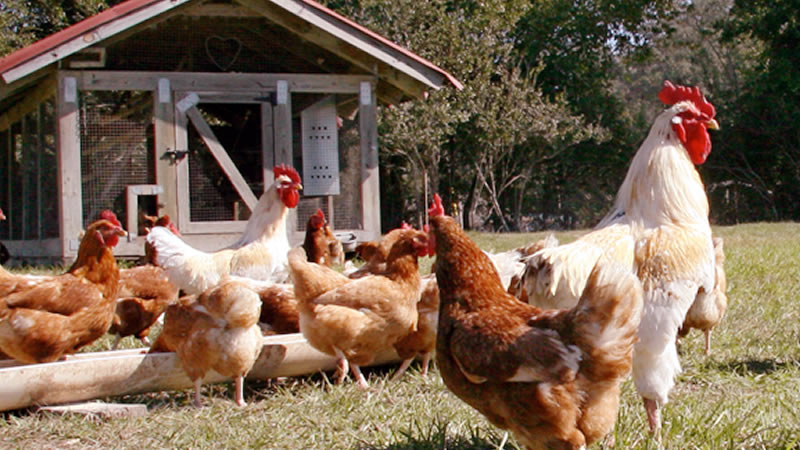
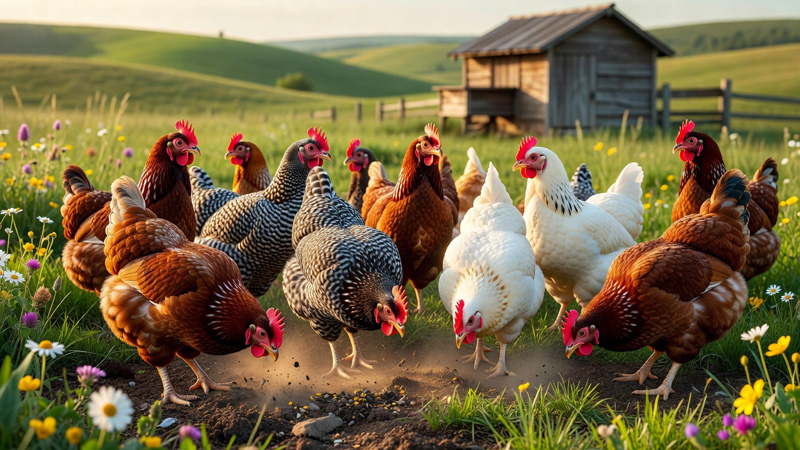
Free range chickens are chickens that are allowed to move outside instead of staying confined inside cages all day. Usually, they have access to an outdoor area where they can walk, scratch the soil, hunt insects, and behave more naturally.
Sounds straightforward, right? Well, not exactly.
The problem is that the term “free range” does not always mean the same thing everywhere. One farmer may allow chickens outside for several hours daily, while another may only provide limited outdoor access for a short time. Because of this, many people debate what truly qualifies as free range.
Animal welfare groups have argued about the term for years. Some organizations believe certain commercial farms use the label mainly for marketing purposes even if the chickens barely spend time outdoors.
Even so, both large poultry farms and small backyard chicken keepers continue using the term because consumers generally prefer eggs and meat from chickens raised with outdoor access.
Legal Definition of Free Range Chickens
In commercial poultry farming, there are official guidelines for what can legally be called free range. However, the rules still vary depending on the country.
According to the USDA, free range chickens must have access to the outdoors during their laying cycle. What makes the definition controversial is that the USDA does not clearly specify how much outdoor space chickens should receive or how long they should stay outside.
European countries tend to have stricter standards. In the UK and parts of the European Union, chickens are expected to receive more structured outdoor access and minimum space allowances.
For example, welfare guidelines from the RSPCA recommend around 12 square meters of space for every 30 chickens. Roosting bars should also provide enough room for each bird to perch comfortably.
Free range broiler chickens raised for meat are often required to grow more slowly compared to conventional commercial broilers. In many systems, they are processed at older ages, which allows better physical development.
Australia follows similar welfare standards in many cases, especially regarding stocking density and outdoor access.
What Free Range Means for Backyard Chicken Owners
For ordinary chicken keepers, free ranging is usually less about legal definitions and more about giving chickens a healthier and more natural lifestyle.
Some people allow their flock to roam the backyard all day. Others only let chickens outside for a few hours in the afternoon. There is no single perfect method that works for everybody.
The important thing is making sure the chickens remain safe, healthy, and protected from unnecessary risks.
If you are still new to chicken keeping, spend time learning your flock’s behavior before fully free ranging them. Some breeds are calm and stay close to the coop, while others are adventurous and surprisingly good at flying over fences.
Temperament matters more than many beginners realize. A breed that behaves well in one backyard may create chaos in another.
Free Range vs Cage-Free vs Pasture-Raised
People often use the terms free range, cage-free, and pasture-raised as if they mean the same thing. They do share similarities, but there are important differences.
Free Range Chickens
Free range chickens have access to outdoor areas. The amount of outdoor space and the length of time outside can vary greatly depending on the farm or owner.
Cage-Free Chickens
Cage-free chickens are not confined inside cages. They can move around indoors freely, but they may never actually go outside.
This surprises many consumers because the phrase “cage-free” sounds much healthier than it sometimes is.
Pasture-Raised Chickens
Pasture-raised chickens generally receive much larger outdoor areas compared to free range birds. According to standards from the Certified Humane Program, pasture-raised chickens should have at least 108 square feet of outdoor space per bird.
By comparison, free range chickens under the same program only require around 2 square feet of outdoor space each.
That huge difference explains why pasture-raised eggs are usually more expensive. More land, fencing, and management are needed to maintain true pasture systems.
Advantages of Raising Free Range Chickens
1. Free Range Chickens Are More Active and Happier
Chickens naturally enjoy scratching dirt, chasing insects, and exploring new areas. Once released outdoors, most birds immediately become more energetic and curious.
You can actually notice the difference. Chickens confined for long periods often rush outside excitedly the moment the coop door opens.
While scientists still debate whether chickens experience emotions exactly like humans do, experienced chicken keepers usually recognize signs of content behavior in free ranging flocks.
2. Chickens Can Behave Naturally
Modern chickens may have been domesticated for thousands of years, but many instincts from their wild ancestors are still there.
When chickens free range, they spend hours foraging, dust bathing, exploring, and searching for food. Those behaviors are difficult to fully express inside a confined coop.
Honestly, watching chickens roam around naturally is one of the most enjoyable parts of backyard chicken keeping.
3. Bullying Inside the Flock Is Reduced
Chicken bullying becomes more common when birds are crowded together in small spaces.
Pecking order problems still happen in free range systems, but chickens have more room to escape aggressive flock members. Instead of being trapped inside a coop corner, weaker birds can simply move away.
This helps reduce stress within the flock.
4. Free Range Chickens Develop Stronger Bones
Outdoor chickens spend more time walking, running, jumping, and flapping their wings. Because of that extra movement, their bones and muscles often become stronger.
Exercise also improves circulation and overall physical condition.
In heavily confined systems, chickens sometimes gain weight faster than their skeletal structure can comfortably support. Free ranging helps reduce that issue.
5. Free Range Eggs Are Often More Nutritious
Several studies have shown that eggs from free range hens may contain higher levels of certain nutrients compared to conventional caged eggs.
Depending on the chickens’ diet, free range eggs can contain more vitamin A, vitamin E, and beta carotene. Some studies also found lower saturated fat and cholesterol levels.
Diet plays a major role here. Chickens eating grass, seeds, insects, and natural forage usually produce richer yolks too.
6. Chickens Help Control Backyard Pests
Free range chickens love hunting insects. Worms, beetles, mites, grasshoppers, spiders, and other pests quickly become chicken snacks.
In many backyards, chickens help reduce bug populations naturally without chemicals.
They also scratch and loosen soil constantly, which can help with garden cultivation. Of course, that same behavior can destroy flower beds too, so be careful where you let them roam.
7. Feed Costs Can Be Reduced
Since free range chickens gather part of their own food, feed consumption often decreases.
Protein-rich insects and natural forage can replace a portion of commercial feed expenses. This does not mean chickens should stop receiving balanced feed entirely, but many owners notice lower feed bills over time.
Disadvantages of Raising Free Range Chickens
1. Predators Become a Serious Threat
This is probably the biggest problem with free ranging chickens.
Once chickens leave the safety of the coop, predators gain opportunities to attack. Depending on where you live, threats may include hawks, eagles, raccoons, snakes, foxes, stray dogs, or even neighborhood cats.
Some predators strike during the day while others wait until nightfall.
A single attack can wipe out multiple birds surprisingly fast.
2. Eggs Become Harder to Find
Hens do not always lay eggs where you want them to.
Free range hens often choose hidden nesting spots under bushes, behind storage areas, or inside thick grass. Beginners sometimes think egg production dropped when the hens are actually laying somewhere else.
There is also a higher chance of contamination if eggs remain outdoors too long in dirty conditions.
3. Chicken Poop Ends Up Everywhere
People love the idea of free range chickens until they step in chicken droppings across the yard.
Poop on walkways, patios, gardens, and outdoor furniture becomes part of the reality. Wet droppings can also attract flies and create hygiene problems if the area is neglected.
Dirty conditions increase the risk of parasites and bacterial diseases as well.
4. Neighbors May Get Irritated
Some chicken breeds wander farther than expected. Others can fly over low fences easily.
If chickens enter a neighbor’s property repeatedly, complaints usually follow sooner or later. Nobody wants chicken droppings covering their driveway or garden.
Even friendly neighbors can become frustrated after enough incidents.
5. Free Range Chickens Are More Exposed to Disease
Outdoor chickens encounter more environmental hazards than confined birds.
They may come into contact with wild birds, contaminated soil, standing water, parasites, or bacteria. Diseases such as coccidiosis, Salmonella infection, avian influenza, and E. coli infections become more difficult to control in poorly managed free range systems.
Bumblefoot is another common issue because chickens walk on rough outdoor surfaces regularly.
How to Avoid Problems When Raising Free Range Chickens
The good news is that most free range problems can be reduced with proper planning and management.
- Provide enough outdoor space for every chicken.
- Install strong fencing around the free range area.
- Use covered runs or overhead netting if hawks are common.
- Keep the environment clean and dry.
- Add several nesting boxes to encourage hens to lay inside the coop.
- Collect eggs daily and store them properly.
- Plant trees or shrubs to provide shade and protection.
- Choose calmer chicken breeds if you live close to neighbors.
- Vaccinate chickens and monitor them for signs of illness.
- Lock chickens safely inside the coop before sunset.
Conclusion
Raising free range chickens has plenty of benefits, but it also comes with responsibilities many beginners underestimate.
Your chickens may become healthier, more active, and more entertaining to watch. You can also enjoy fresher eggs and potentially reduce feed costs. At the same time, predators, diseases, hidden eggs, and messy backyards are challenges you cannot ignore.
Still, many backyard chicken keepers believe the benefits outweigh the disadvantages once they gain experience. Watching chickens roam freely, scratch the soil, and behave naturally gives a very different feeling compared to seeing them locked inside cages all day.
It takes patience in the beginning, no doubt about that. But once you establish a good routine and proper setup, free ranging chickens becomes much easier and far more rewarding.